The almond nail shape exists in fashion’s most coveted territory—universally flattering, endlessly versatile, and inherently elegant regardless of length or design choice. Named for its resemblance to the actual nut, the almond shape tapers gently from a wider base to a softly rounded point, creating a silhouette that visually elongates fingers, suits virtually every hand type, and provides the perfect canvas for everything from minimalist single colors to elaborate nail art masterpieces. There’s a reason almond has become the most requested nail shape in salons worldwide—it simply makes everyone’s hands look more beautiful.
Spring 2026 brings exceptional creative energy to almond nail designs. The shape’s particular geometry—that elegant taper toward the rounded tip—creates visual opportunities that square or round shapes cannot replicate. Gradients flow more dramatically along almond’s length, negative space designs create more interesting compositions on its tapered surface, and the shape itself adds inherent sophistication that elevates even the simplest color choices. An almond nail in basic red polish looks more elegant than the same color on a square nail simply because of the shape’s innate grace.
1. Gradient Sunset Almond
Warm gradient from yellow through coral to pink creates sunset-inspired elegance.

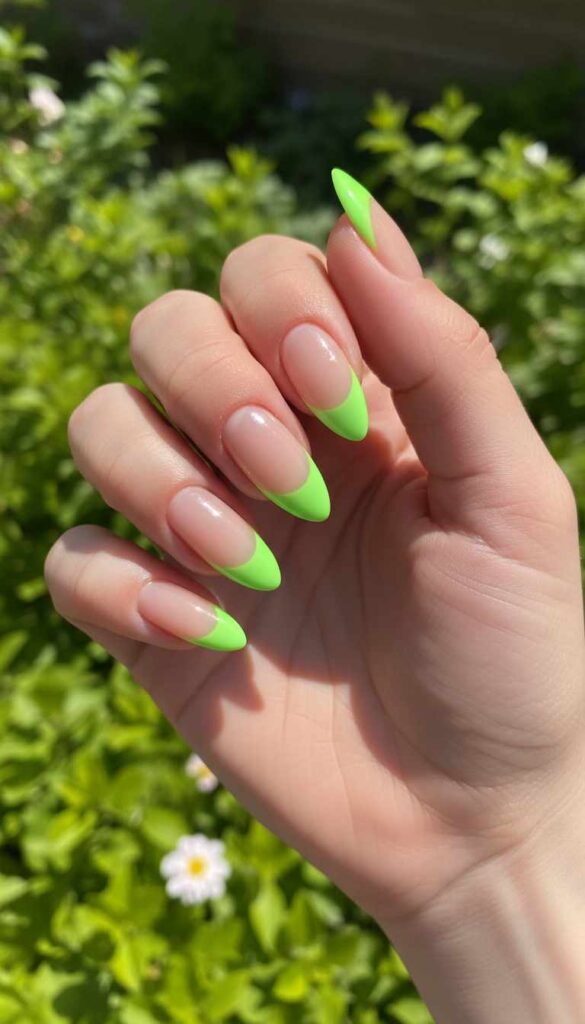
2. Neon Green Tips
Electric lime green French tips on nude base creates bold modern statement.
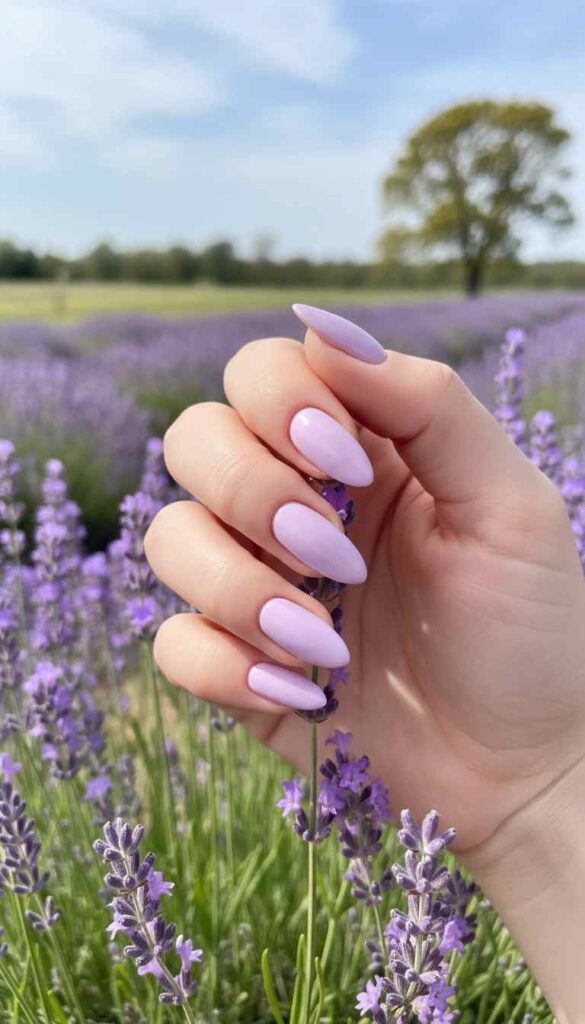
3. Soft Lavender Glossy
Pale lavender gel creates dreamy single-color spring elegance.
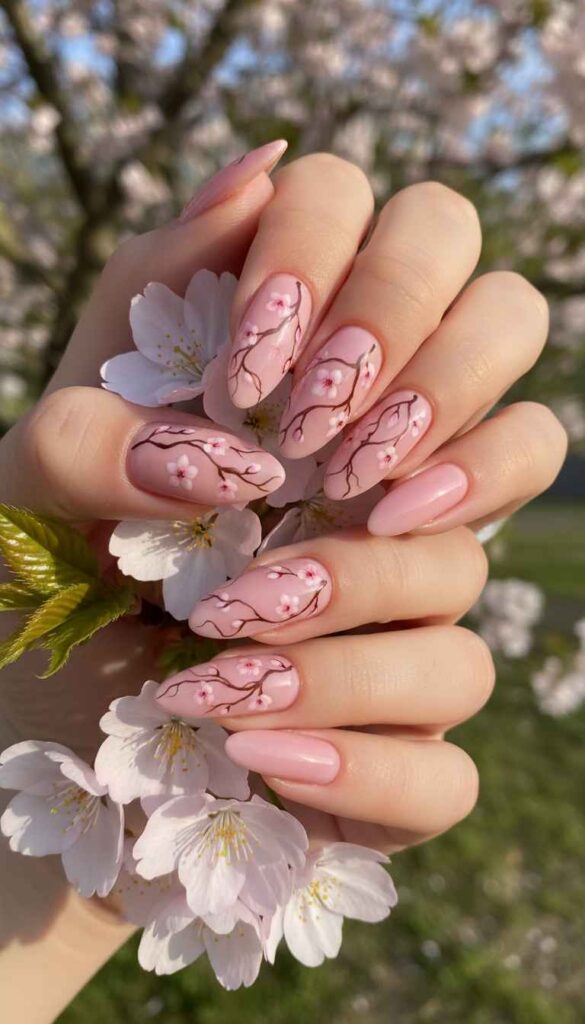
4. Cherry Blossom Art
Hand-painted cherry blossoms on soft pink base creates romantic spring story.
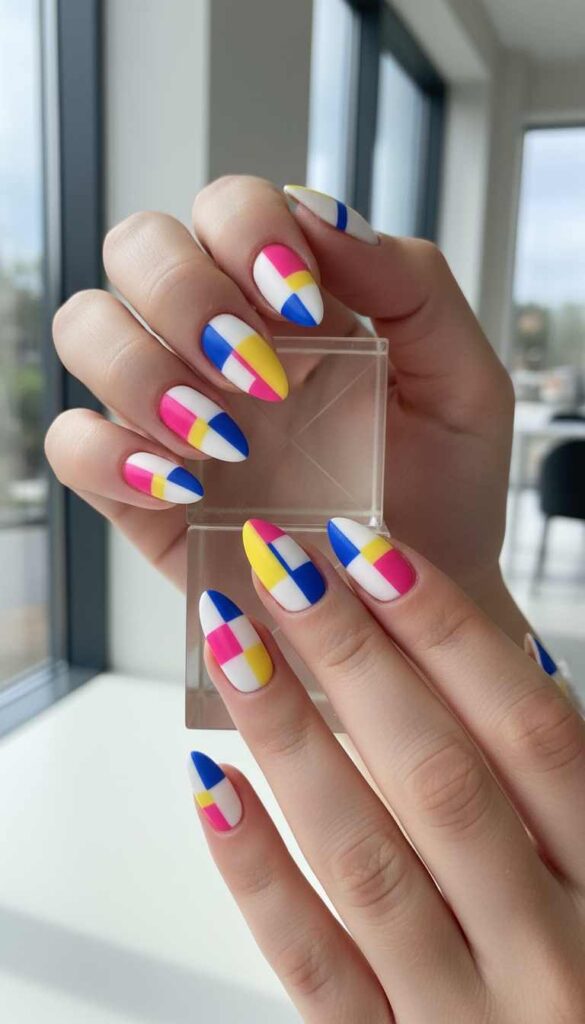
5. Abstract Color Block
Bold geometric color blocks in spring tones creates modern graphic statement.
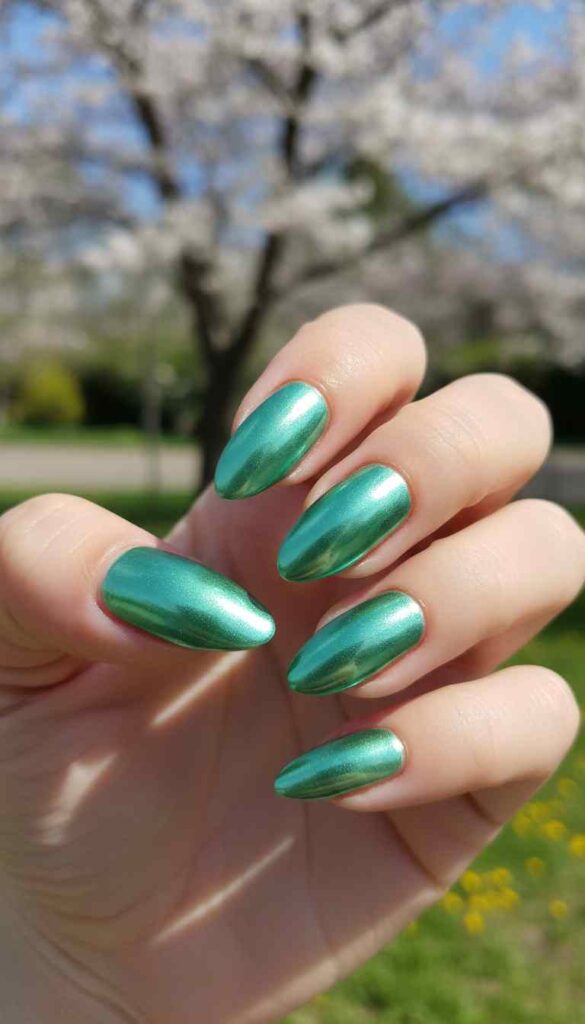
6. Mint Chrome Shine
Metallic mint chrome creates futuristic spring sophistication.
7. Pink Butterfly Details
Soft pink with delicate butterfly illustrations creates spring transformation theme.

8. Coral Reef Ombre
Gradient from coral to peach creates warm dimensional spring beauty.

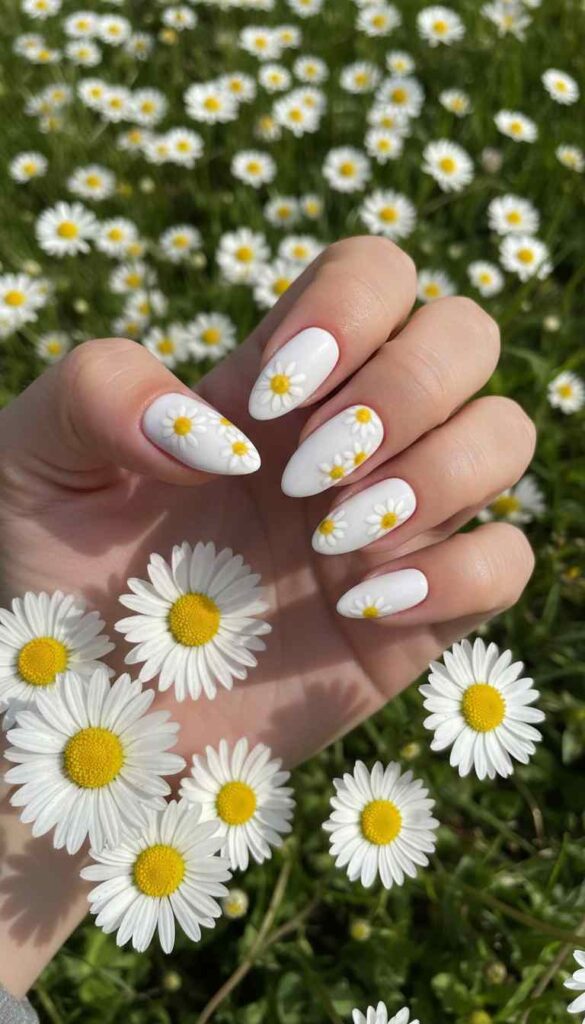
9. White Daisy Garden
White base with hand-painted daisies creates fresh spring garden charm.
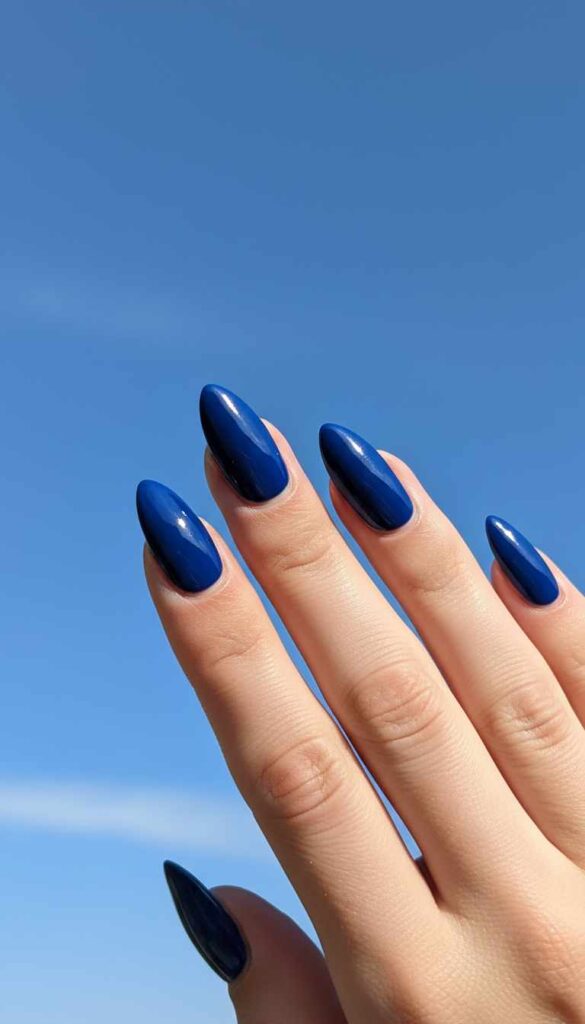
10. Electric Blue Solid
Saturated electric blue creates bold vibrant spring statement.
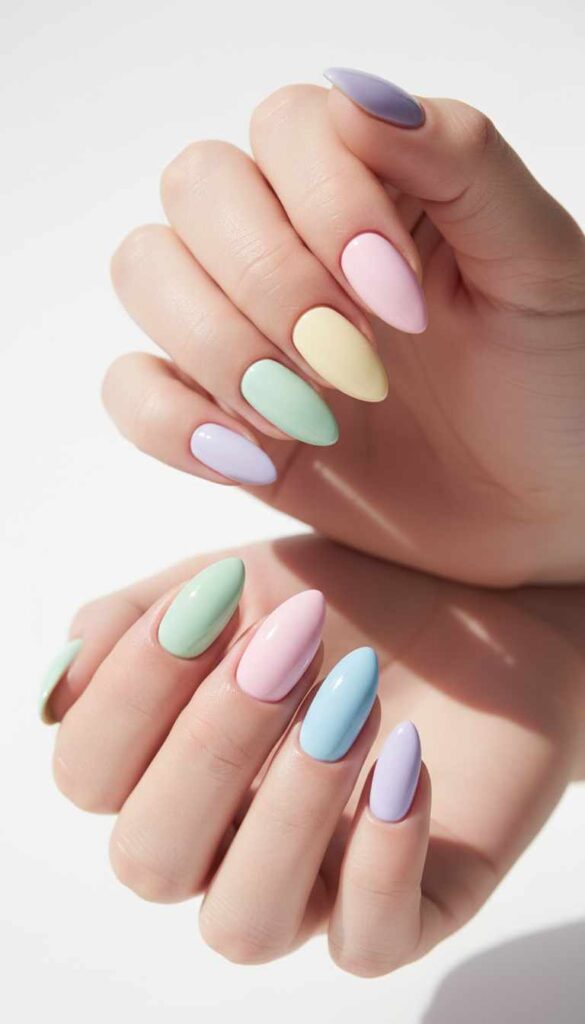
11. Pastel Rainbow Each Nail
Different pastel shade on each nail creates soft rainbow celebration.
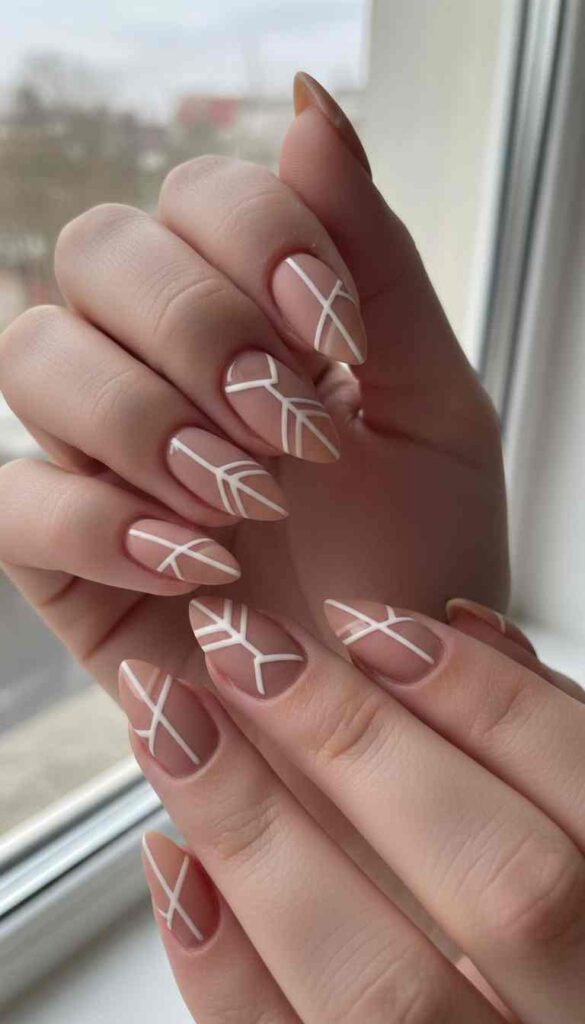
12. Nude Negative Space
Strategic negative space with nude accents creates modern minimalist elegance.
13. Glitter Gradient Tips
Soft pink base with gold glitter concentrated at tips creates sparkly dimension.
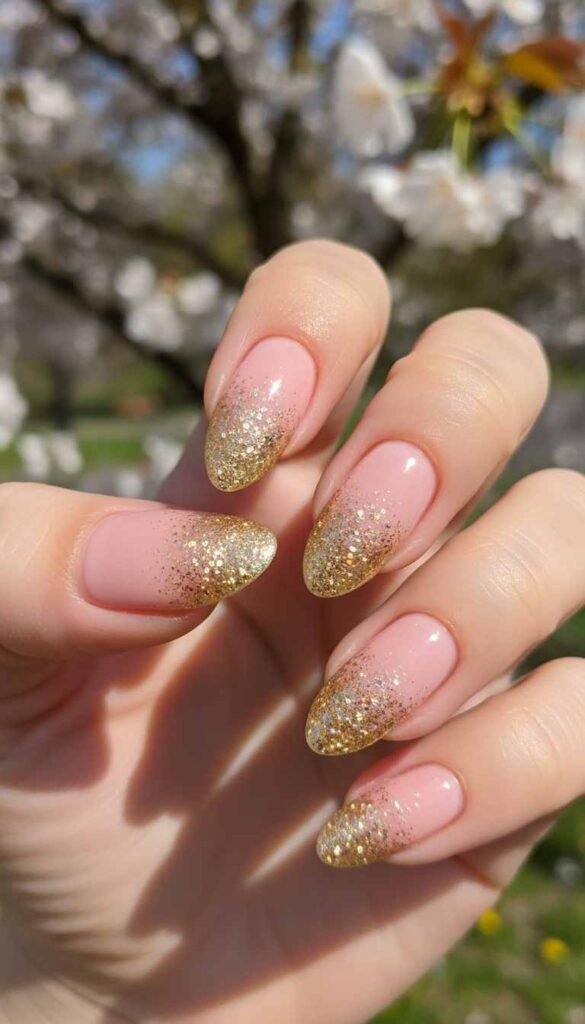
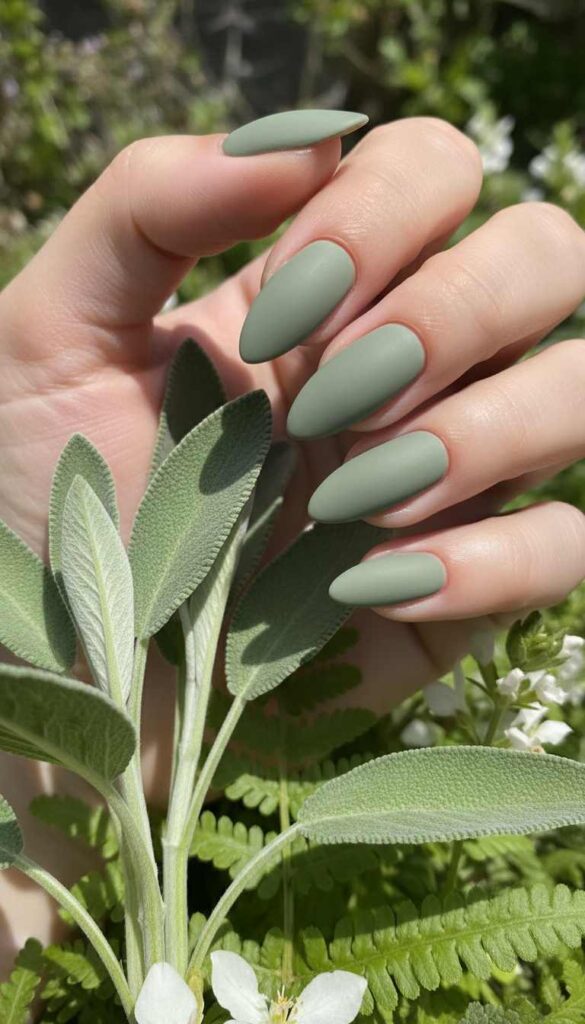
14. Sage Green Matte
Soft sage green with matte finish creates sophisticated botanical statement.
15. Watercolor Floral Wash
Soft watercolor flower effect creates painterly artistic spring beauty.

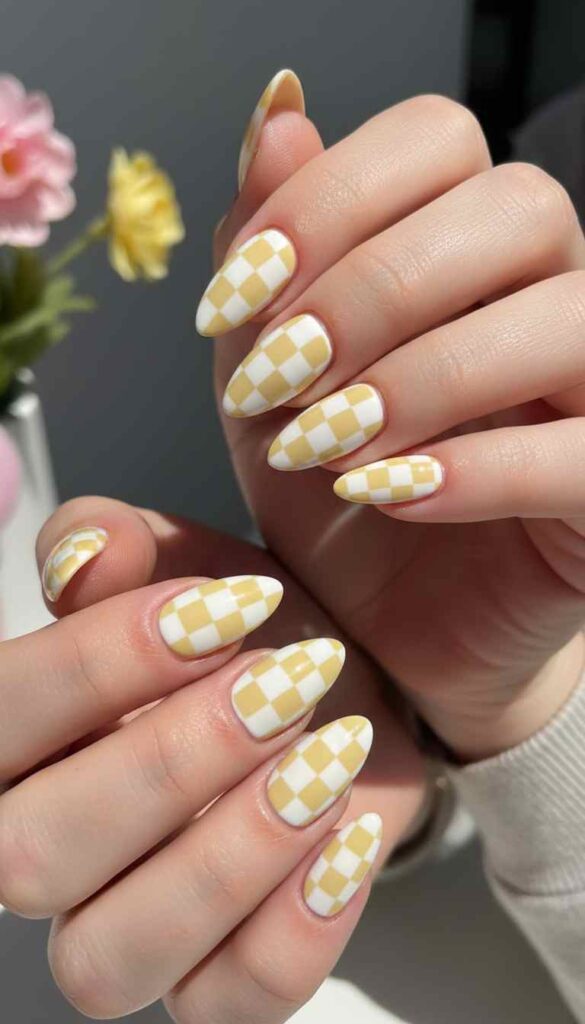
16. Yellow and White Checks
Pastel yellow and white checkerboard creates playful retro pattern.
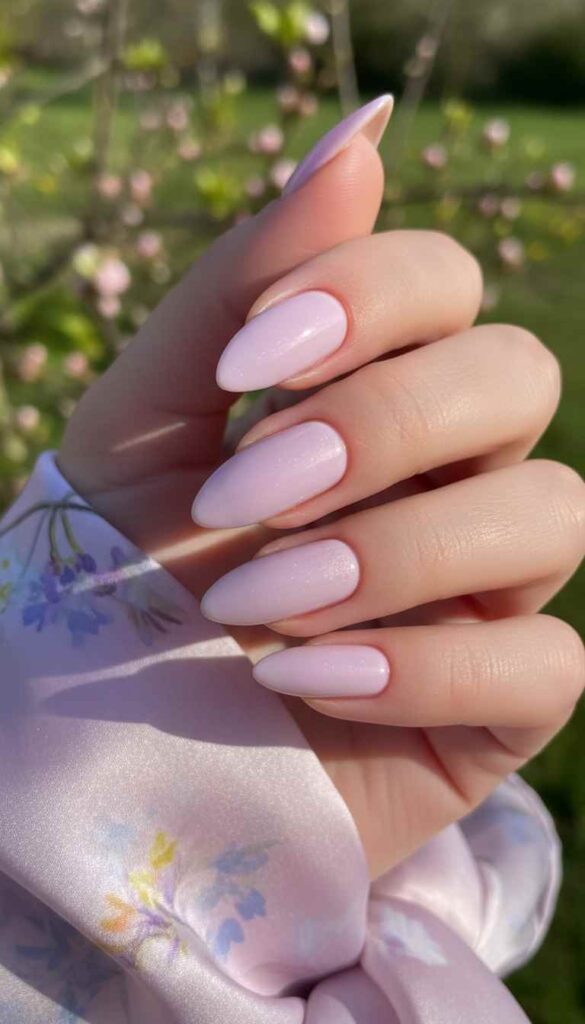
17. Lilac Shimmer
Pale lilac with subtle shimmer creates light-catching spring sophistication.
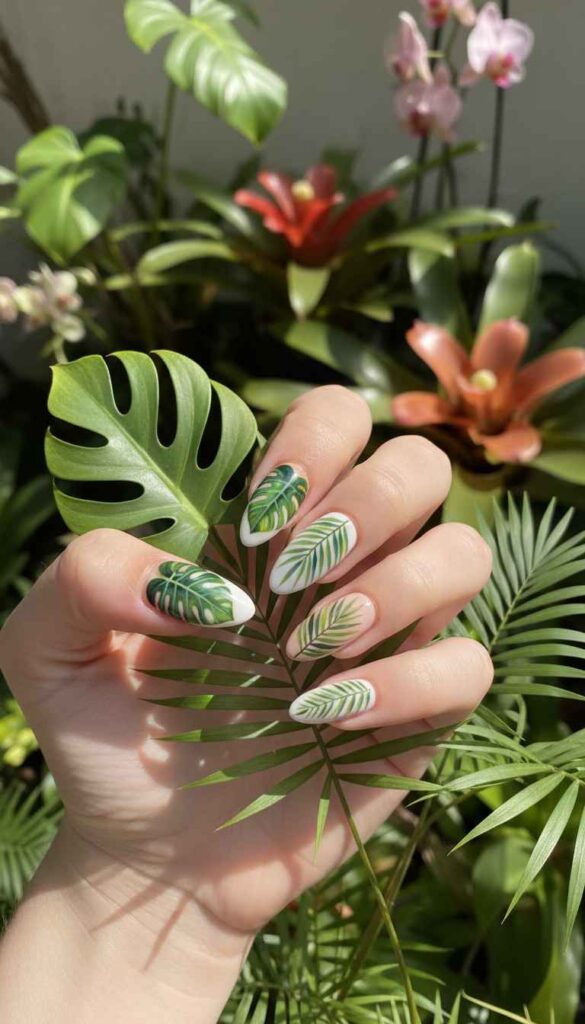
18. Tropical Leaf Art
Bright green leaf illustrations creates vibrant spring botanical statement.
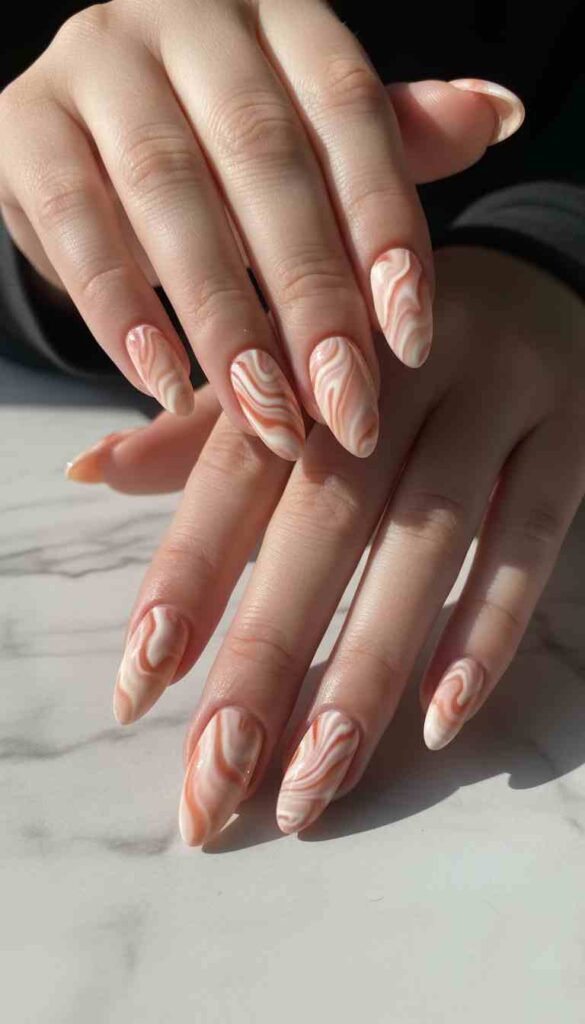
19. Peachy Cream Marble
Marble swirl in peach and cream creates sophisticated spring elegance.
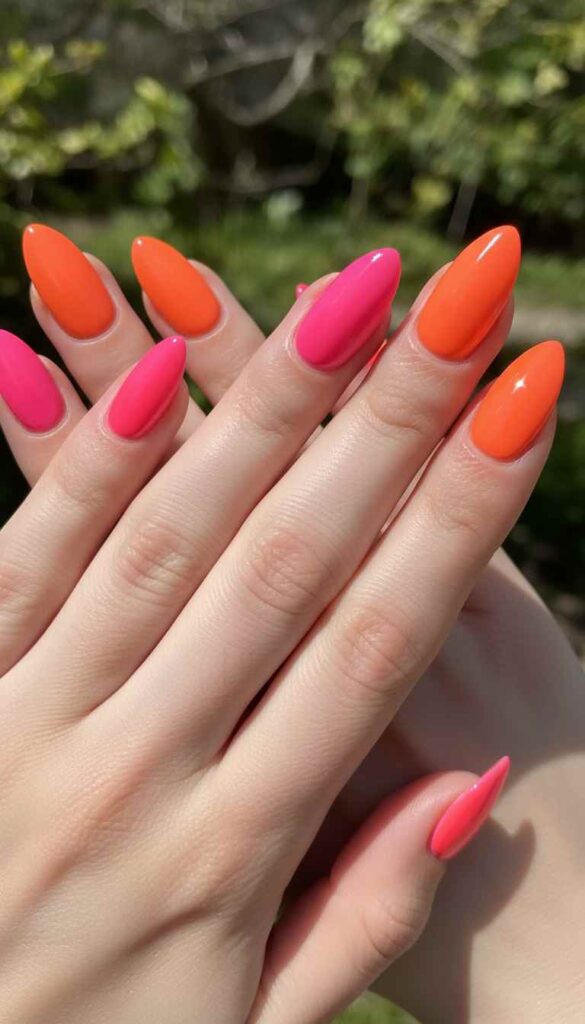
20. Neon Pink and Orange
Alternating neon pink and orange nails creates bold color contrast.
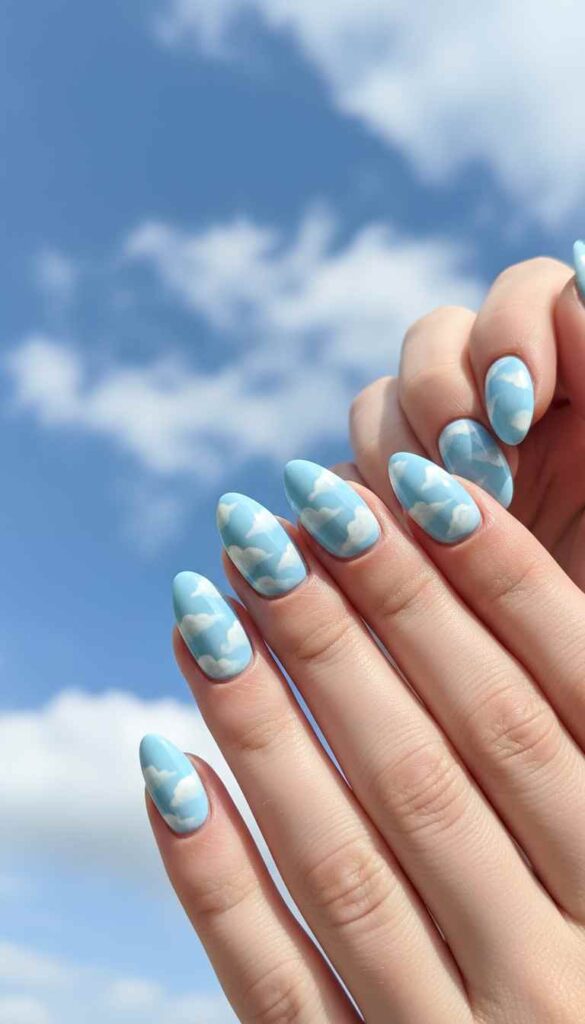
21. Soft Blue Cloud
Pale blue with puffy white clouds creates dreamy sky-inspired sweetness.
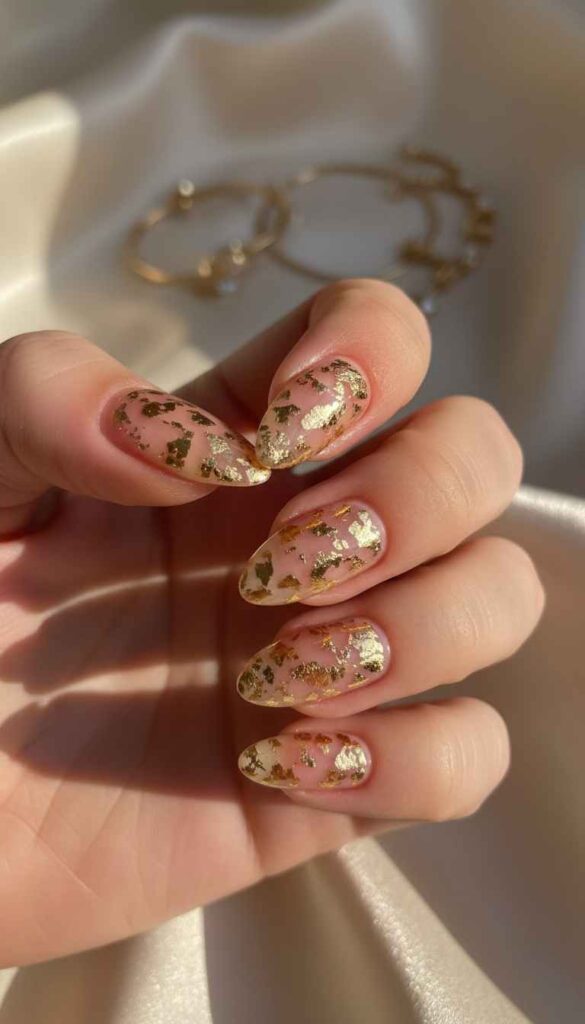
22. Gold Foil Accent
Nude base with gold foil pieces creates luxurious spring statement.
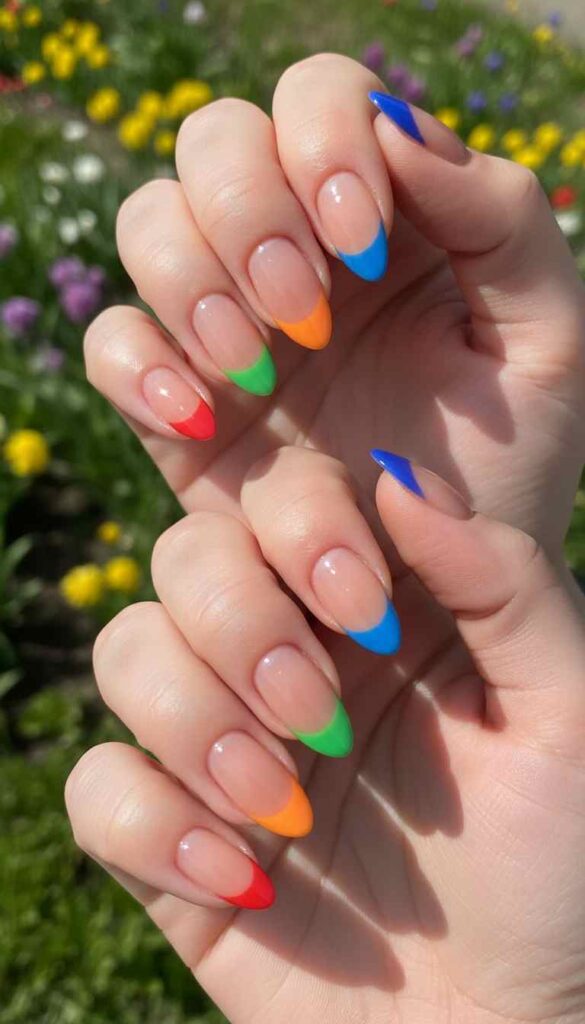
23. Rainbow French Multi
Rainbow-colored French tips creates vibrant spectrum celebration.
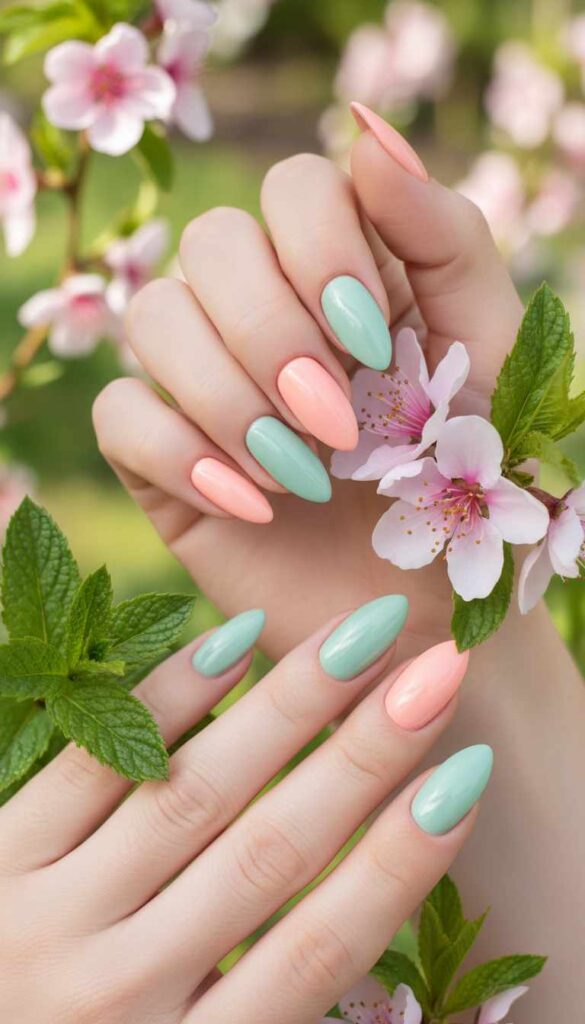
24. Mint and Peach Combo
Alternating mint and peach creates soft complementary color harmony.
The Almond Shape Advantage
The almond nail shape’s universal flattery comes from specific geometric principles that create optical effects benefiting virtually all hand types. The shape’s taper from wider base to narrower tip creates visual finger elongation—your eye follows the taper line outward, making fingers appear longer and more slender than they actually measure. This elongation effect works regardless of your natural finger length or width, making almond genuinely universally flattering rather than suited only to specific hand types.
The rounded tip prevents the harsh angles that square shapes create while avoiding the complete curve of oval shapes. This balance gives almond both visual interest (the subtle point) and wearability (the rounded tip that’s less prone to breakage than sharp stiletto points). The shape reads as deliberately chosen rather than default, communicating aesthetic awareness without requiring extreme length or dramatic styling.
For nail art specifically, almond’s proportions create ideal composition space. The wider base provides canvas for detailed work, the taper creates natural gradient flow, and the rounded tip offers a natural focal point for accent elements. Designs that might look cramped on short square nails or require extreme length on stiletto nails find their perfect home on medium-length almond shapes.
Achieving and Maintaining Almond Shape
Creating true almond shape requires specific filing technique that many people attempting DIY shaping don’t understand. The process begins with establishing the highest point of the free edge (typically at the center of each nail), then filing from both sides toward that central peak, creating the characteristic taper. The final step rounds the peak slightly, preventing a sharp point while maintaining the almond silhouette.
Professional shaping delivers more consistent results than most DIY attempts because technicians have practiced the muscle memory required to create even, symmetrical tapers across all ten nails. If attempting almond shaping at home, using a high-quality file and working in good light while frequently comparing nails helps achieve better symmetry. Filing in one direction rather than sawing back and forth prevents the splitting and peeling that undermines the clean lines almond requires.
Maintaining almond shape requires regular attention as nails grow. Every two to three weeks, reshaping maintains the characteristic taper and prevents the shape from growing into something unintentional. Without maintenance, almond shape naturally evolves toward oval as the tips grow longer, losing the particular taper that makes almond distinct.
Length Considerations for Almond
While almond shape technically works at any length, certain length ranges showcase the shape’s characteristics most beautifully. Very short almond nails (just past fingertip) show the shape but lack the dramatic taper that makes almond so recognizable. The shape works but doesn’t reach its full aesthetic potential.
Medium length (1/4 to 1/2 inch past fingertip) represents almond’s sweet spot where the shape’s elegance fully emerges without requiring extreme length that challenges daily activities. This length provides enough nail surface for elaborate art while maintaining genuine practicality for typing, texting, and daily hand use. Most of the designs in this guide assume medium almond length as the ideal canvas.
Long almond nails (3/4 inch or more past fingertip) create dramatic, fashion-forward statements perfect for special occasions or individuals whose lifestyles accommodate very long nails. The extreme taper becomes a bold statement rather than subtle elegance. However, very long almonds require careful maintenance and aren’t practical for everyone’s daily life.
Almond Shape and Hand Proportions
While almond universally flatters, understanding how it interacts with your specific hand proportions helps optimize the shape for your particular fingers. Longer, more slender fingers can wear almond at any length beautifully—the shape’s elongation enhances what’s already present. Shorter or wider fingers benefit most from almond’s elongating effects, with medium length creating optimal visual lengthening without overwhelming hand proportions.
Nail bed width also influences optimal almond proportions. Wider nail beds benefit from slightly more pronounced taper to avoid the shape appearing too broad at the base. Narrower nail beds might look better with subtler taper to prevent an overly pointed appearance. These refinements are subtle, but they’re part of why professional shaping often looks better than DIY attempts—experienced technicians make these micro-adjustments automatically based on each client’s specific proportions.
The space between your fingers when hand is relaxed also affects how almond appears. If your fingers naturally separate with visible space between, almond’s elegant lines show beautifully. If fingers sit close together, slightly shorter almond length prevents the tips from appearing crowded when fingers are together.
Color and Design for Spring Almond
Spring 2026’s color trends find perfect expression on almond nails. The shape’s length provides ideal canvas for the season’s characteristic gradients—sunset ombres, pastel-to-white fades, and multi-color transitions all flow beautifully along almond’s taper. The shape naturally directs the eye from base to tip, making gradient transitions feel organic and intentional.
Spring’s bold neons gain sophistication on almond shapes that they might lack on blunter silhouettes. The shape’s inherent elegance tempers neon’s potential for appearing juvenile, creating a balance where vibrant color reads as fashion-forward confidence rather than trying too hard. This makes almond ideal for women wanting to embrace spring’s bold color energy while maintaining sophisticated aesthetic.
Pastel colors—spring’s other characteristic palette—appear their most elegant on almond nails. The shape’s grace complements pastel’s delicacy, creating harmonious beauty where shape and color reinforce each other’s gentle sophistication. Very pale pastels that might wash out on other shapes gain visual interest from almond’s dimensional taper.
Nail Art Techniques Optimized for Almond
Certain nail art techniques work particularly beautifully on almond shapes because they leverage the shape’s specific geometry. Vertical gradients and ombres flow naturally along almond’s length, with color transitions that follow the taper creating organic beauty. Horizontal patterns and details can be scaled to follow the nail’s changing width, creating designs that feel customized to the shape rather than applied generically.
Negative space designs create especially interesting compositions on almond nails. The shape’s taper allows negative space patterns that direct the eye along the nail’s length, creating dynamic designs that feel like they’re moving even when static. Geometric patterns that would feel static on square nails gain visual flow when applied to almond’s curves.
French manicures and variations reach their most elegant expression on almond nails. The tip’s rounded point creates a natural focal point, and French tips following almond’s natural curve create the most flattering smile line possible. This is partly why French manicures remain so persistently popular—they genuinely look best on almond and oval shapes that the majority of clients request.
Lifestyle and Almond Practicality
Almond nails balance elegance with reasonable practicality better than most shapes. The rounded tip prevents the snagging and breakage that pointed stiletto nails experience, while the moderate length most people choose for almond (medium rather than extreme) allows comfortable daily activities including typing, texting, and fine motor tasks.
That said, any shaped nails beyond very short require some lifestyle adjustment. Almond nails change how you pick up small objects, how you type, and how you approach various daily tasks. Most people adapt within a week, but understanding there’s an adjustment period prevents frustration during the learning curve.
Professional contexts increasingly accept more fashion-forward nail choices including almond shapes in reasonable lengths. The shape’s inherent elegance reads as sophisticated rather than frivolous, making it appropriate for most workplace environments. Combined with classic colors or subtle designs, almond nails rarely face professional pushback that more dramatic stiletto or coffin shapes might encounter.
Seasonal Transition Planning
While this guide celebrates spring 2026 specifically, understanding how your almond nails might transition through coming seasons helps with longer-term planning. Spring’s soft colors and floral designs naturally evolve toward summer’s brighter tropical aesthetics as temperatures rise. The same almond shape that showcases spring pastels beautifully will work equally well for summer’s vibrant neons and beach-inspired art.
As autumn approaches, many people transition their almond nails toward deeper, richer tones—burnt oranges, deep wines, forest greens—while maintaining the shape they’ve grown to love through spring and summer. The shape’s versatility means you’re never locked into one seasonal aesthetic; almond works with every color palette and design category.
Winter might see you maintaining almond or trying different shapes as mood strikes. Understanding that nail shape choice isn’t permanent—you can change shapes as easily as colors—frees you to fully commit to almond for spring without worry about being locked in indefinitely.
Celebrating Almond Excellence
These 24 almond nail designs demonstrate the extraordinary range this single shape encompasses when paired with spring 2026’s most exciting trends. From the simplest single colors to the most elaborate nail art, almond provides the perfect canvas that enhances every choice through its inherent elegance and universal flattery.
The most important element in choosing your spring almond design is selecting what genuinely resonates with your personal aesthetic rather than following trends that don’t speak to you. Almond’s popularity means countless design possibilities—embrace the exploration process, try designs that intrigue you, and trust your instincts about what feels authentically you.