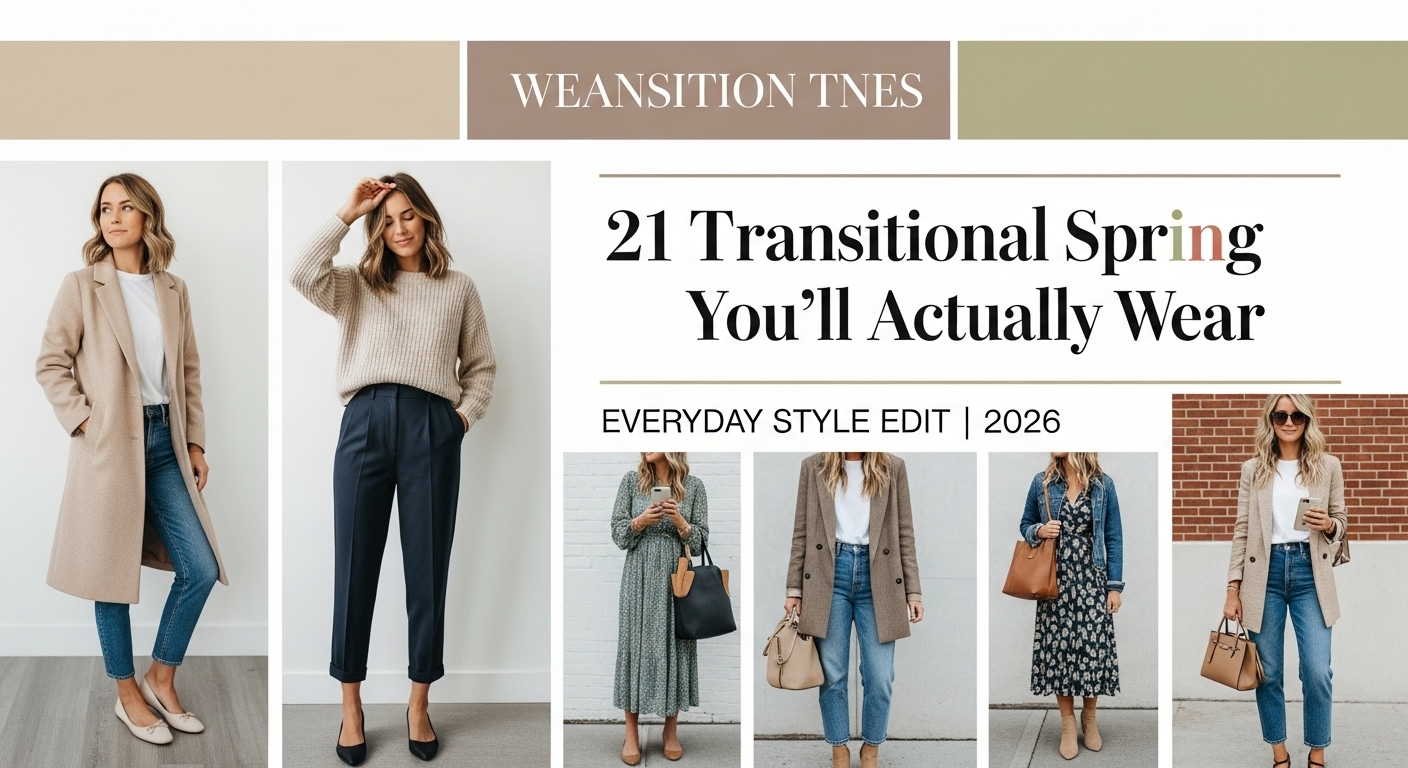
Spring transition dressing is perhaps the most challenging fashion puzzle—navigating unpredictable temperatures, morning chills that give way to afternoon warmth, and the awkward period between winter heaviness and summer lightness. The key to mastering this in-between season lies in strategic layering, versatile pieces, and fabrics that adapt to fluctuating conditions. Spring 2026 makes transition dressing easier than ever with innovative fabrics, smart styling techniques, and pieces designed specifically for this temperamental time of year.
Real-life spring transition outfits need to work hard—taking you from cool morning commutes to warmer afternoon meetings, handling sudden weather changes, and looking polished throughout. These aren’t theoretical outfits that only work in perfect conditions; they’re practical solutions for actual spring days when you leave home in a jacket and return carrying it over your arm. These 21 outfit ideas prove that transition dressing can be stylish, comfortable, and completely adaptable to whatever spring throws your way.
1. Trench Coat Over Lightweight Knit
A water-resistant trench coat layered over a fine-gauge crewneck sweater and straight-leg jeans creates adaptable layered protection.
Why it works: The trench handles rain and wind while being light enough to carry when temperatures rise. The lightweight knit provides warmth without bulk, and jeans are transitional wardrobe heroes.

2. Cardigan Over Dress with Tights
A midi dress layered with opaque tights, ankle boots, and a chunky cardigan creates feminine transitional warmth.
Why it works: The tights provide leg warmth for cool mornings, the cardigan can be removed as temperatures rise, and the dress works alone when it’s finally warm.

3. Denim Jacket Over Hoodie
A classic denim jacket layered over a cozy hoodie with chinos and sneakers creates casual transitional ease.
Why it works: The double layer handles cool temperatures while each piece can be removed independently. This combination is comfortable and practical for active days.

4. Blazer with Turtleneck and Pants
A structured blazer over a fitted turtleneck with tailored pants creates professional transitional polish.
Why it works: The turtleneck provides neck warmth for cool mornings, the blazer adds structure and can be removed indoors, and the combination remains professional throughout temperature changes.

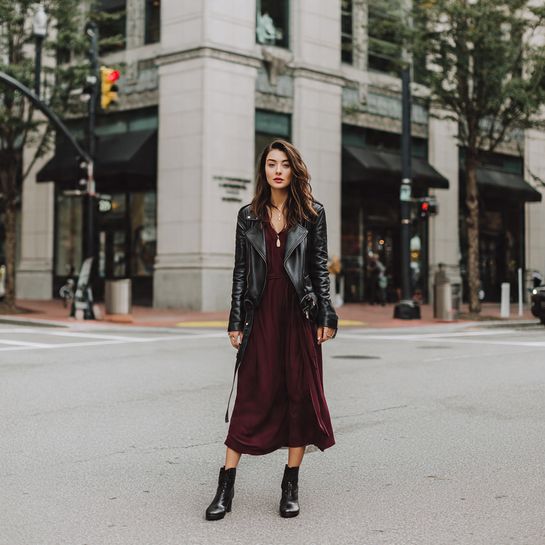
5. Leather Jacket Over Long-Sleeve Dress
A leather jacket layered over a long-sleeve midi dress with ankle boots creates edgy transitional versatility.
Why it works: The leather blocks wind while the long sleeves handle coolness. Both pieces work independently as weather warms, maximizing wardrobe versatility.
6. Vest Layering Over Long-Sleeve
A puffer or utility vest layered over a long-sleeve tee with jeans creates core-warming transitional practicality.
Why it works: The vest keeps your core warm while leaving arms free to regulate temperature. It’s easy to remove and tie around waist when not needed.

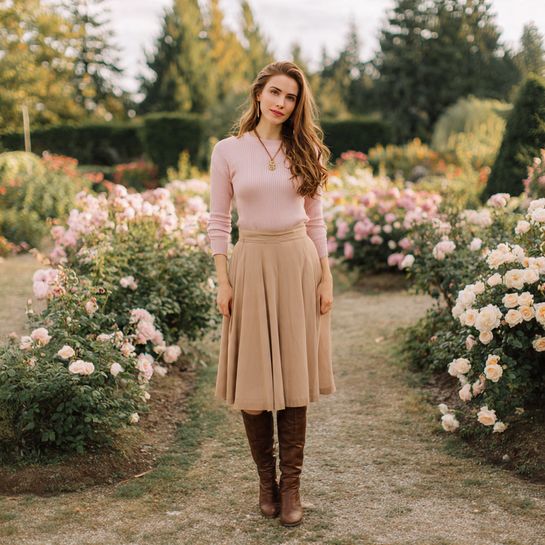
7. Light Sweater with Midi Skirt and Boots
A lightweight sweater tucked into a midi skirt with knee-high boots creates transitional feminine coverage.
Why it works: The boots provide leg warmth, the skirt offers breathability, and the light sweater can handle temperature swings without overheating.
8. Chambray Shirt Layered Under Sweater
A chambray shirt worn under a V-neck sweater with chinos creates preppy transitional layering.
Why it works: The visible collar adds polish, the chambray provides an extra layer, and the sweater can be removed to reveal a complete shirt outfit underneath.

9. Maxi Dress with Denim Jacket and Sneakers
A lightweight maxi dress layered with a cropped denim jacket and sneakers creates casual transitional flow.
Why it works: The maxi provides coverage while remaining breezy, the jacket handles cool moments, and sneakers keep it grounded for walking.

10. Long Cardigan Over Jeans and Tee
A flowing longline cardigan over a simple tee and jeans creates easy transitional layering.
Why it works: The longline cardigan provides coverage and warmth while being easy to remove. This outfit works from morning to evening with simple adjustments.

11. Jumpsuit with Jacket
A lightweight long-sleeve jumpsuit paired with a structured jacket creates one-piece transitional convenience.
Why it works: The jumpsuit eliminates outfit coordination, the long sleeves handle coolness, and the jacket adds structure that can be removed as needed.

12. Sweatshirt Dress with Leggings
An oversized sweatshirt dress worn over leggings with boots creates cozy transitional comfort.
Why it works: The legging layer provides warmth and coverage, the dress offers coziness, and the combination works for temperature fluctuations throughout the day.

13. Silk Blouse with Lightweight Blazer
A flowing silk blouse under a lightweight blazer with cropped pants creates elegant transitional polish.
Why it works: Silk regulates temperature naturally, the light blazer provides structure without weight, and cropped pants prevent overheating while maintaining polish.

14. Turtleneck Under Slip Dress
A fitted turtleneck layered under a slip dress with ankle boots creates creative transitional layering.
Why it works: This unexpected layering extends summer pieces into cooler weather while creating interesting visual texture. The turtleneck can be swapped for a tank as it warms.

15. Trench Vest Over Turtleneck
A sleeveless trench vest layered over a fitted turtleneck with jeans creates structured transitional style.
Why it works: The vest provides core warmth and style without arm bulk. It’s easy to remove and looks intentional as outerwear or removed.

16. Lightweight Knit with Wide-Leg Pants
A breathable lightweight knit sweater with flowing wide-leg pants creates transitional ease and movement.
Why it works: The lightweight knit provides warmth without heaviness, while wide-leg pants offer airflow. Both pieces work independently as weather changes.

17. Hoodie Under Leather Jacket
A fitted hoodie under a leather jacket with jeans creates street-style transitional cool.
Why it works: The double layer handles significant temperature drops, both pieces work separately, and the combination has urban style appeal.

18. Shacket Over Tank and Jeans
A flannel shacket worn as a jacket over a fitted tank and jeans creates versatile transitional layering.
Why it works: The shacket is the ultimate transition piece—heavier than a shirt, lighter than a jacket. It works buttoned or open for temperature flexibility.

19. Knit Dress with Tights and Jacket
A sweater dress with tights and an unstructured jacket creates cozy transitional coverage.
Why it works: The dress and tights combo provides warmth, the jacket adds a removable layer, and the outfit remains comfortable throughout varying temperatures.

20. Scarf Layering with Light Jacket
A lightweight jacket with a chunky scarf over a tee and pants creates adjustable transitional warmth.
Why it works: The scarf adds significant warmth without bulk and can be easily removed and stored in a bag as temperatures rise.

21. Long-Sleeve Romper with Cardigan
A long-sleeve romper paired with an open cardigan and sneakers creates playful transitional ease.
Why it works: The romper is a complete outfit with built-in coverage, the cardigan adds warmth that’s easily removed, and the combination works for various spring activities.

Mastering the Transition
Spring transition dressing in 2026 is about smart layering, adaptable pieces, and embracing the uncertainty of the season with preparedness rather than frustration. These 21 real-life outfit ideas prove that you don’t need an entirely separate wardrobe for this in-between period—you need strategic pieces that work together in multiple combinations and can adapt to changing conditions throughout the day.
The key to successful transition dressing is investing in quality layering pieces: a reliable trench coat, a versatile denim or leather jacket, lightweight knits, and pieces that work both alone and layered. Choose fabrics that regulate temperature naturally—cotton, linen blends, lightweight wool, and silk—and avoid anything too heavy or too light to handle temperature swings.