Winter hiking brings a special kind of beauty, from frost-covered forests and snow-dusted mountain paths to quiet lakes surrounded by icy landscapes.
For women planning outdoor adventures in 2027, the right hiking outfit should combine dependable warmth, moisture management, weather protection, and freedom of movement.
Layering lightweight base garments with insulating midlayers and weather-resistant outerwear helps you adapt to changing temperatures during a hike.
This season’s outdoor style also embraces earthy colors, technical fabrics, modern hiking trousers, insulated jackets, and accessories designed for comfort on the trail.
Whether you are exploring wooded paths, climbing rocky hills, or enjoying a snowy mountain viewpoint, dressing appropriately can make your adventure more comfortable and enjoyable.
In this guide, you will discover 30 winter hiking outfit ideas for women, each paired with a detailed image prompt to inspire beautiful outdoor fashion photography while keeping practical trail dressing in focus.
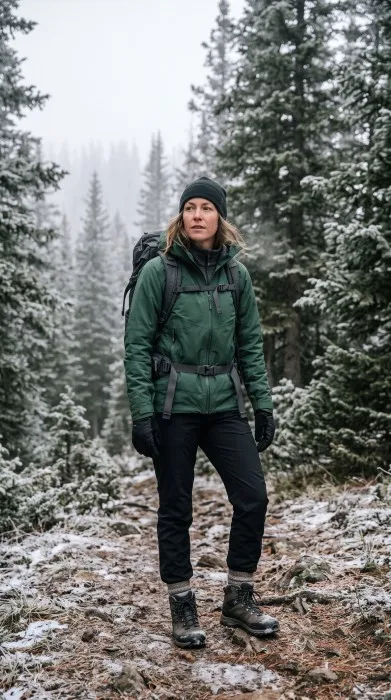
1. Forest Green Shell Jacket with Black Hiking Pants
A forest green shell jacket creates a natural outdoor look while providing a protective outer layer against wind and light precipitation when the jacket is properly rated for the conditions. Pair it with black hiking trousers, a moisture-wicking thermal base layer, and sturdy waterproof hiking boots. Merino wool socks and insulated gloves help keep your extremities comfortable on cold trails. A compact hiking backpack provides space for water, snacks, and extra layers. This outfit is ideal for wooded routes where temperatures remain low and the weather can change unexpectedly.
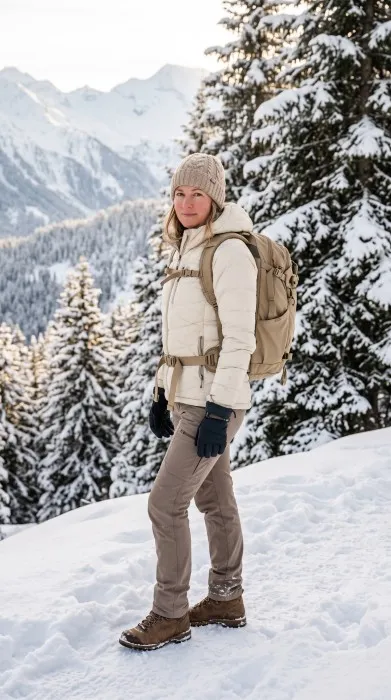
2. Cream Insulated Jacket with Taupe Hiking Trousers
A cream insulated jacket paired with taupe hiking trousers creates a soft, understated outfit for cold-weather walks. Choose a jacket with sufficient insulation for the expected temperature and trousers that allow easy movement over uneven terrain. A warm base layer, wool socks, and supportive hiking boots provide practical foundations beneath the neutral outerwear. Add a beige beanie and a weather-resistant backpack in a complementary shade. This combination looks especially beautiful against snowy scenery, although darker or more visible accessories can help improve visibility on the trail.
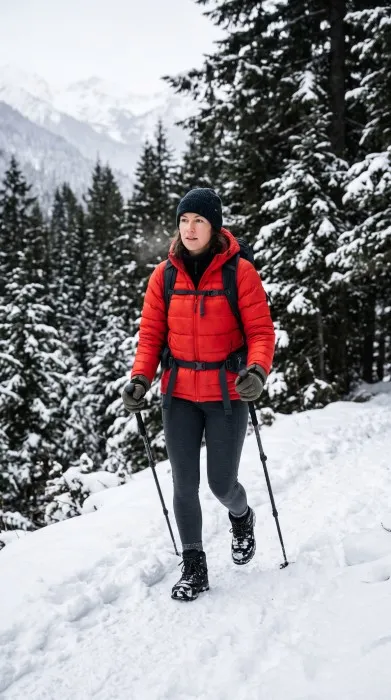
3. Bright Red Puffer with Charcoal Hiking Leggings
A bright red puffer jacket adds a vivid accent to a practical hiking outfit and can improve visibility in many outdoor environments. Pair it with charcoal thermal hiking leggings designed for cold-weather activity and boots with dependable traction. A black fleece midlayer helps retain warmth, while a snug beanie and touchscreen-compatible gloves add everyday convenience. Choose leggings with enough stretch for climbing slopes and stepping over rocks. This outfit is well suited to established winter trails where the conditions call for insulation and freedom of movement.
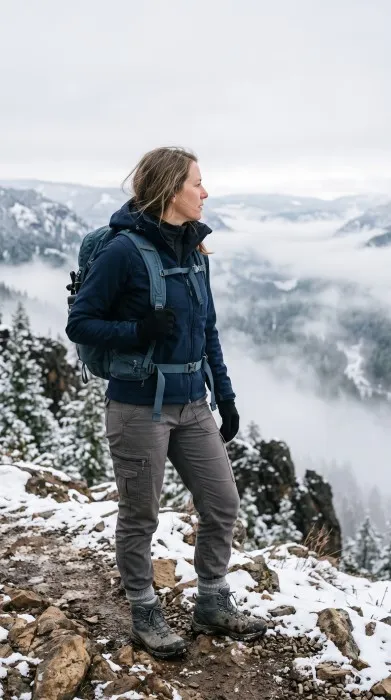
4. Navy Softshell Jacket with Grey Cargo Hiking Pants
A navy softshell jacket and grey cargo hiking pants offer a practical combination for brisk winter hikes. Softshell fabric can provide useful wind resistance and flexibility, although a waterproof shell may still be necessary in sustained rain or wet snow. Wear a breathable thermal base layer underneath and select cargo trousers with secure pockets for small essentials. Insulated hiking boots and wool-blend socks help support comfort over longer distances. A compact blue-grey backpack completes the outfit while keeping the overall styling understated and functional.
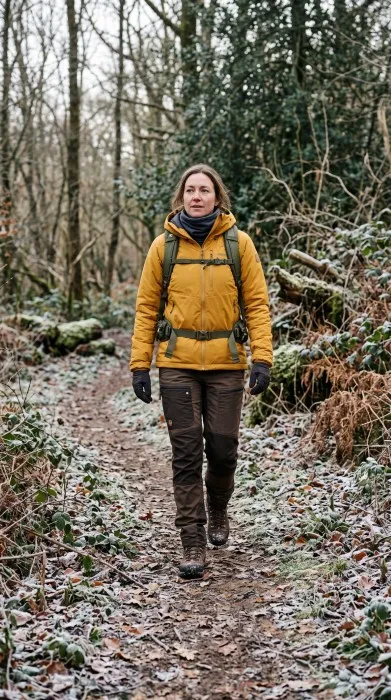
5. Mustard Yellow Jacket with Dark Brown Hiking Pants
A mustard yellow insulated jacket brings warmth and personality to a winter hiking wardrobe. Pair it with dark brown technical trousers, a moisture-wicking long-sleeve base layer, and rugged boots suited to the trail surface. A brown or charcoal neck gaiter helps protect against cold wind, while insulated gloves keep hands comfortable during exposed sections. The rich color combination looks striking among bare branches and winter grasses. This outfit is a strong choice for countryside routes and forest hikes with chilly but manageable conditions.
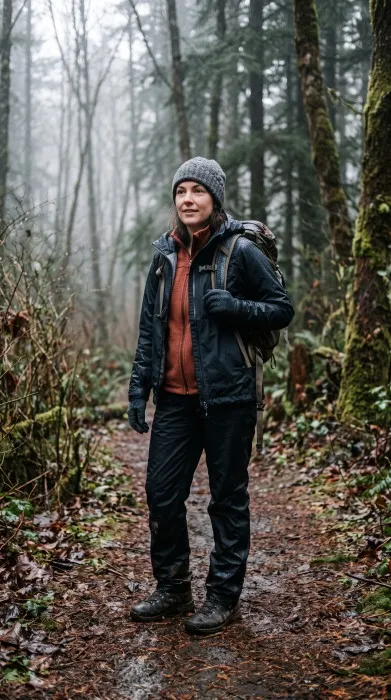
6. Layered Fleece Jacket with Waterproof Overtrousers
For damp winter trails, a warm fleece combined with waterproof overtrousers offers practical protection without relying on one heavy garment. Start with a moisture-wicking base layer, add a fleece midlayer, and finish with a waterproof shell jacket if rain or wet snow is expected. Overtrousers can be worn over suitable hiking pants and adjusted to fit securely over boots. A waterproof backpack cover and gloves provide useful additional protection. This setup is especially helpful in regions where winter weather changes rapidly throughout the day.
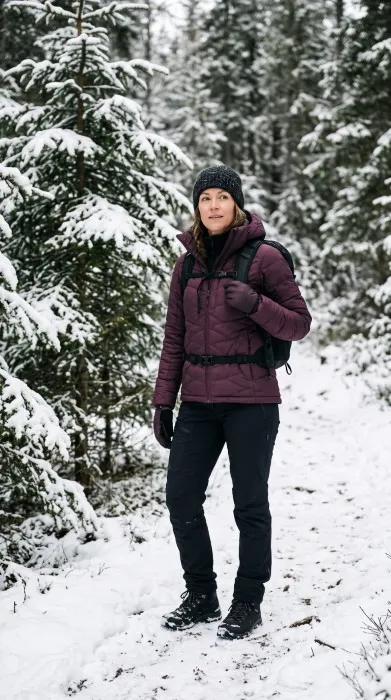
7. Plum Insulated Jacket with Black Technical Trousers
A plum insulated jacket provides a rich color alternative to traditional black and navy outdoor clothing. Pair it with black technical hiking trousers, a lightweight thermal top, and insulated boots with strong traction. A black fleece headband or beanie and dark gloves help create a coordinated look while providing warmth. Choose outerwear with enough room for layering without restricting shoulder movement. This outfit works well for cold forest walks, maintained mountain paths, and scenic winter excursions.
8. All-Black Winter Hiking Ensemble
An all-black hiking ensemble creates a streamlined outdoor look built around practical technical layers. Combine a breathable black base layer, an insulated black jacket, durable hiking pants, and waterproof boots with suitable grip. A dark neck gaiter and warm gloves add protection without interrupting the monochrome appearance. Consider a backpack or small accessories in a contrasting high-visibility color for easier visibility outdoors. This outfit is versatile for established trails, chilly morning walks, and winter trips where dependable layering matters more than decorative details.
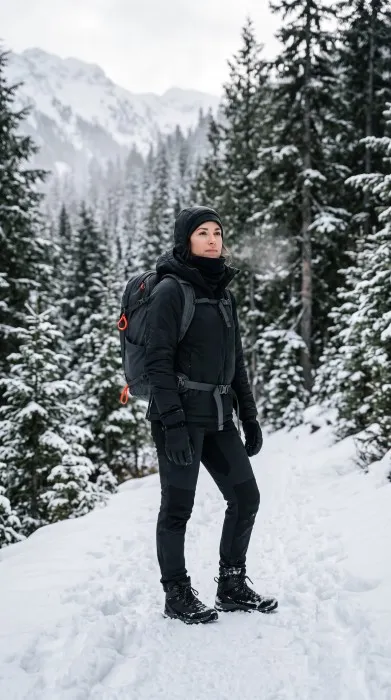
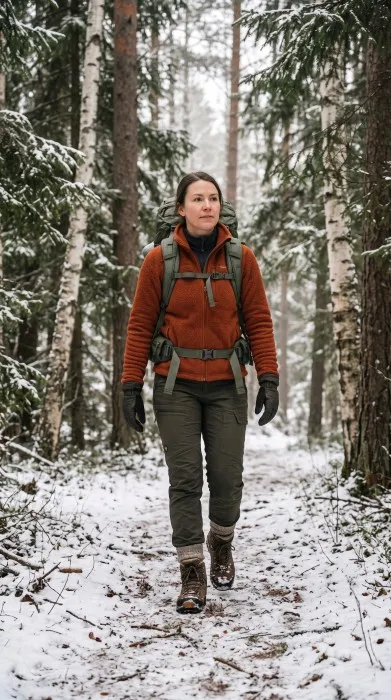
9. Rust Fleece with Olive Hiking Trousers
A rust fleece jacket and olive hiking trousers create an earthy combination inspired by rugged outdoor landscapes. Wear the fleece over a moisture-wicking base layer and add a weather-resistant shell if the forecast includes wind or precipitation. Olive trousers with articulated knees make climbing and descending more comfortable. Brown hiking boots, warm socks, and a neutral backpack complement the natural colors. This outfit is ideal for forest trails, countryside walks, and scenic routes where temperatures remain cool but activity generates body heat.
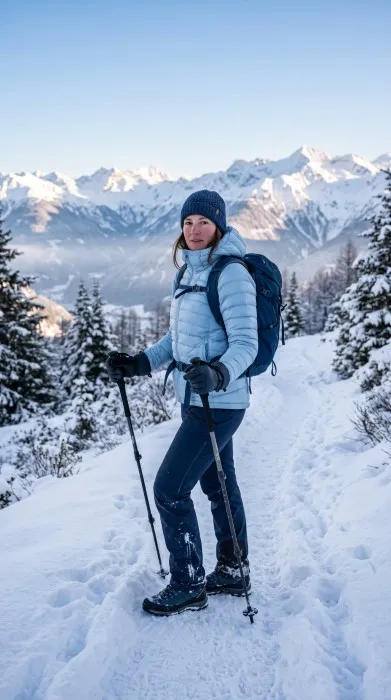
10. Powder Blue Puffer with Navy Snow Pants
A powder blue puffer jacket adds a fresh color to winter hiking gear when paired with navy insulated trousers. For snowy conditions, select trousers designed for outdoor winter activity and a jacket with adequate wind resistance. A thermal base layer, warm socks, and insulated boots help maintain comfort during stops and slower sections. A navy beanie and gloves keep the palette cohesive. This combination is particularly attractive for maintained snowy trails and scenic winter walks in alpine environments.
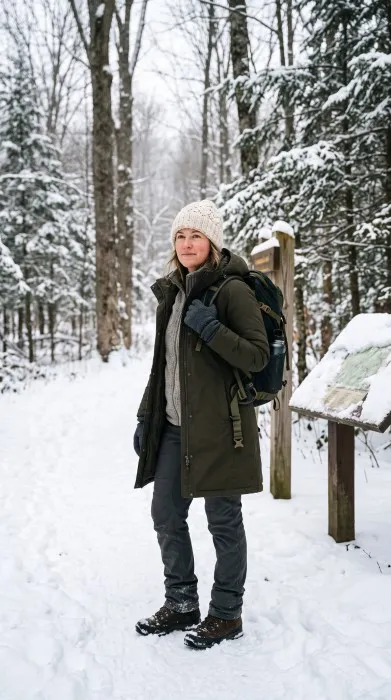
11. Long Insulated Parka with Fleece-Lined Hiking Pants
A longer insulated parka provides extra coverage for cold trailheads, slow winter walks, and breaks in exposed areas. Pair it with fleece-lined hiking pants that allow comfortable movement without becoming excessively bulky. A thermal top and midweight fleece underneath help create an adjustable layering system. Choose supportive waterproof boots and gloves suitable for the expected temperatures. Because long parkas can restrict movement on steep terrain, select a design that allows a comfortable stride and use it for routes where its length is practical.
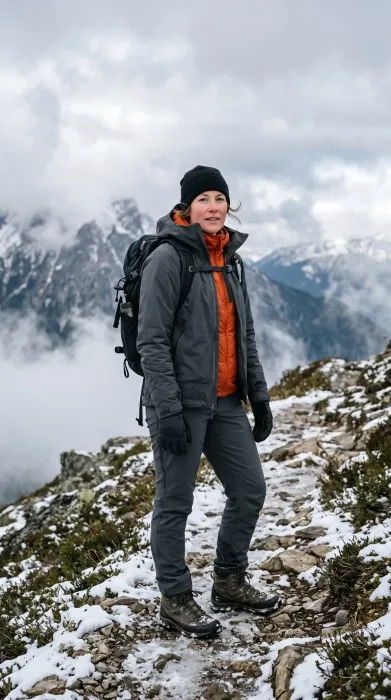
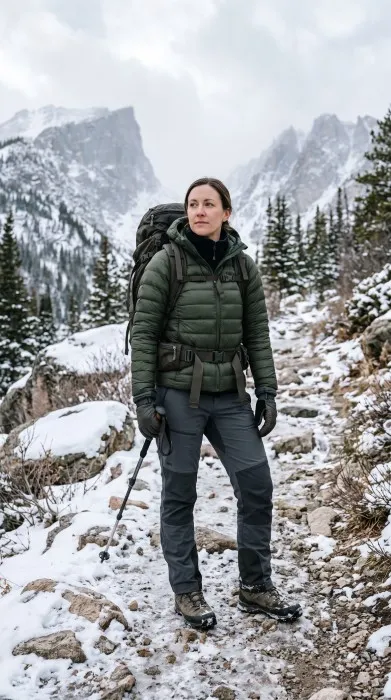
12. Technical Shell with a Bright Orange Midlayer
A technical shell layered over a bright orange midlayer creates a practical outfit with an energetic color accent. Choose a breathable waterproof shell suited to the expected weather and a midlayer that retains warmth without restricting movement. Dark hiking pants and rugged boots provide a durable foundation for the trail. A warm hat and gloves help protect exposed areas during windy sections. This outfit works well for variable conditions when you need an outer layer that can be adjusted as your activity level changes.
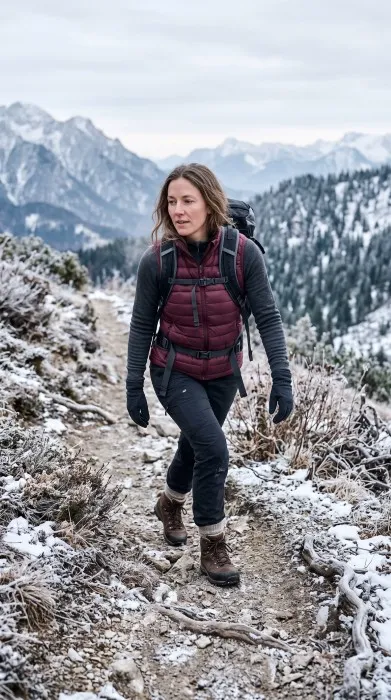
13. Merino Base Layers with a Quilted Vest
A quilted vest over merino wool base layers is useful for active hikes when you need core warmth without too much bulk around the arms. Wear a long-sleeve thermal top beneath the vest and pair it with stretch hiking trousers. A wind-resistant outer shell can be carried for exposed or changeable conditions. Waterproof hiking boots and warm socks complete the practical setup. This outfit suits brisk uphill walks where your body temperature may rise quickly, provided the vest and base layers match the actual weather conditions.
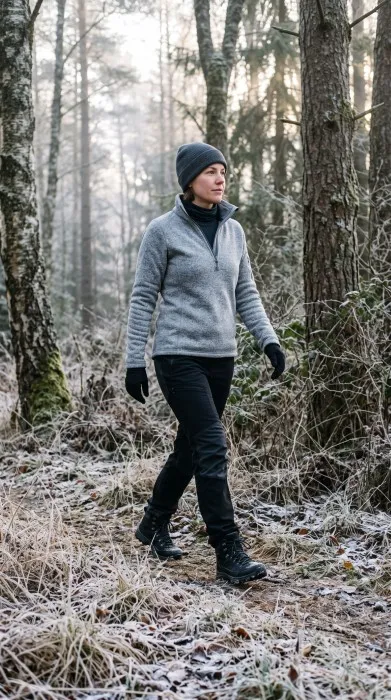
14. Heather Grey Fleece with Black Softshell Pants
A heather grey fleece and black softshell pants create a simple, comfortable outfit for cool-weather hiking. Choose a fleece with a high collar and pair it with flexible trousers that resist light wind and abrasion. A moisture-wicking base layer underneath helps manage sweat during climbs. Add grippy hiking boots, a dark beanie, and lightweight gloves for trail comfort. This outfit is particularly suitable for forest routes, foothill paths, and brisk winter walks where flexibility and easy temperature adjustment are important.
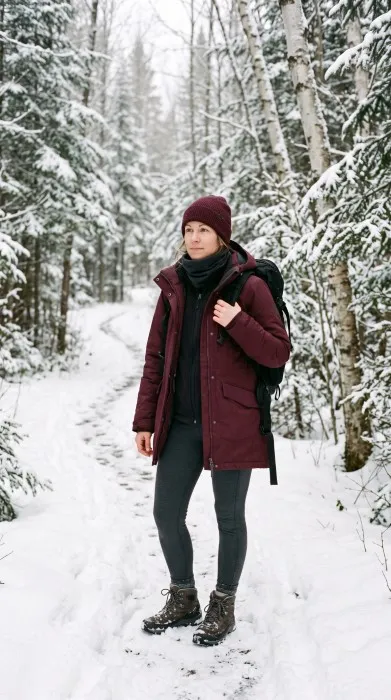
15. Burgundy Parka with Charcoal Thermal Leggings
A burgundy parka paired with charcoal thermal leggings creates a warm-looking outfit with a rich seasonal palette. Choose leggings specifically suitable for hiking rather than thin everyday fashion leggings, especially if the route is exposed or snowy. Add a fleece layer, warm socks, and boots with reliable traction. A charcoal neck gaiter and burgundy beanie can coordinate the accessories without requiring an exact match. This combination is a good option for short winter hikes and well-maintained trails in cold weather.
16. Beige Softshell Jacket with Dark Green Trousers
A beige softshell jacket creates a neutral foundation for dark green hiking trousers. Layer a warm thermal shirt underneath and add a lightweight fleece when the temperature calls for extra insulation. The dark trousers offer a practical contrast and can help disguise everyday trail marks. Brown waterproof boots and a green backpack complete the outdoor look. This outfit works well for mixed woodland paths and rolling countryside, with a waterproof layer packed separately when heavier rain is possible.
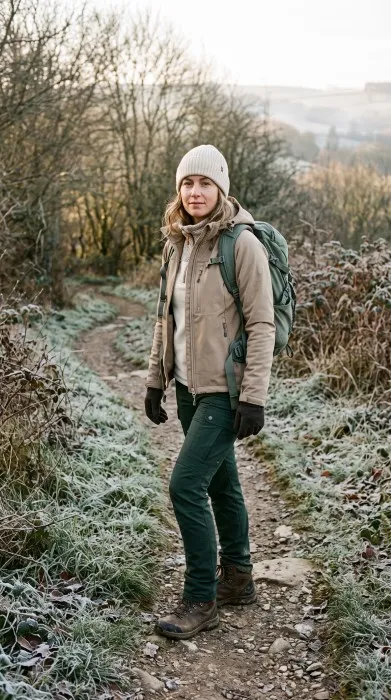
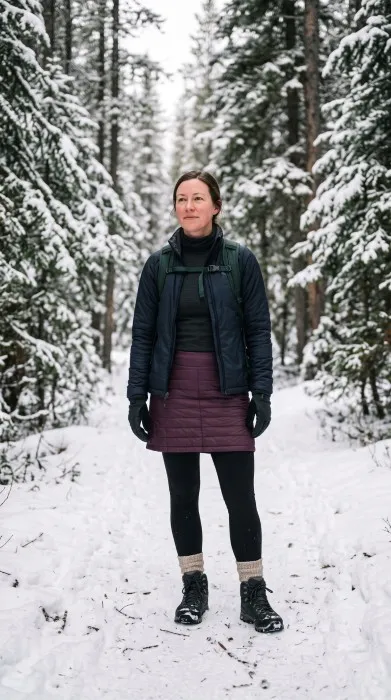
17. Insulated Skirt Over Thermal Leggings
An insulated hiking skirt worn over thermal leggings can provide extra core and upper-leg warmth during cold outdoor activities. Choose a design intended for active use, with a secure fit that allows a full stride. Combine it with a fitted thermal base layer, a lightweight insulated jacket, and supportive hiking boots. Warm socks and gloves are especially important when temperatures are low. This outfit is best suited to appropriate trails and conditions where the skirt does not interfere with foot placement or movement.
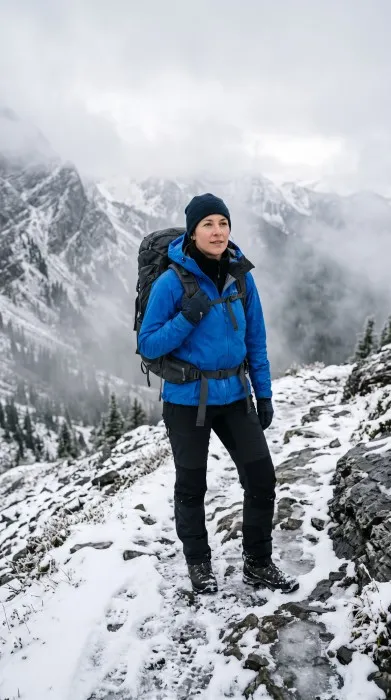
18. Cobalt Blue Shell with Black Winter Hiking Pants
A cobalt blue shell jacket creates a bold and visible outer layer over black winter hiking pants. Pair it with a dark fleece midlayer and a thermal base top for adjustable warmth. Waterproof boots, a secure backpack, and gloves suited to the conditions help complete the ensemble. The bright jacket offers a clear visual accent in landscapes filled with snow and dark evergreens. This combination is suitable for maintained mountain routes when the outer shell provides the necessary protection from wind and precipitation.
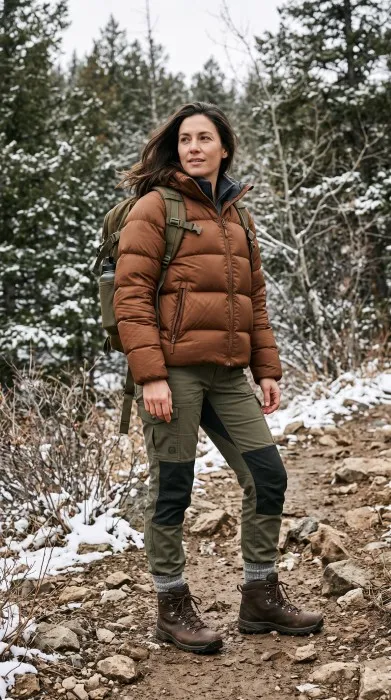
19. Brown Down Jacket with Olive Utility Trousers
A brown down jacket paired with olive utility trousers creates an earthy winter outfit suited to outdoor exploration. Choose a down or synthetic insulated jacket appropriate for the expected temperature and layer it over a moisture-wicking base garment. Utility trousers with reinforced areas can be useful on rugged trails. Brown hiking boots, wool socks, and a neutral backpack complement the warm color palette. This look is especially attractive for forest walks and mountain viewpoints where practical clothing meets natural styling.
20. Two-Tone Fleece with Technical Mountain Pants
A two-tone fleece jacket adds visual interest to technical mountain pants while remaining comfortable for active outdoor use. Choose a combination such as charcoal and sage, navy and grey, or cream and rust. Wear a moisture-wicking base layer underneath and carry a shell for windy ridgelines or wet weather. Durable hiking trousers and boots with appropriate tread complete the ensemble. This outfit is a good choice for hikers who prefer lightweight layers and want their clothing to work across different sections of a trail.
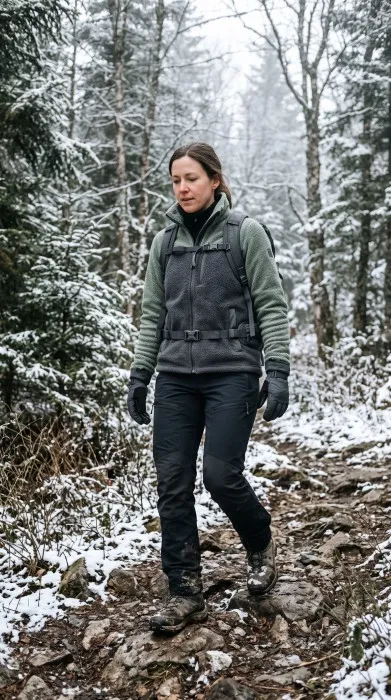
21. Snow White Shell with Graphite Hiking Trousers
A snow white shell jacket creates a crisp contrast against graphite hiking trousers. Choose a waterproof and breathable design suitable for the forecast, then add an insulating midlayer and thermal base garment underneath. Graphite trousers provide a grounded contrast, while sturdy boots and warm socks support comfortable movement. A bright beanie or backpack detail can improve visibility in low-contrast snowy surroundings. This combination is attractive for maintained snow trails and winter landscape walks in appropriate conditions.
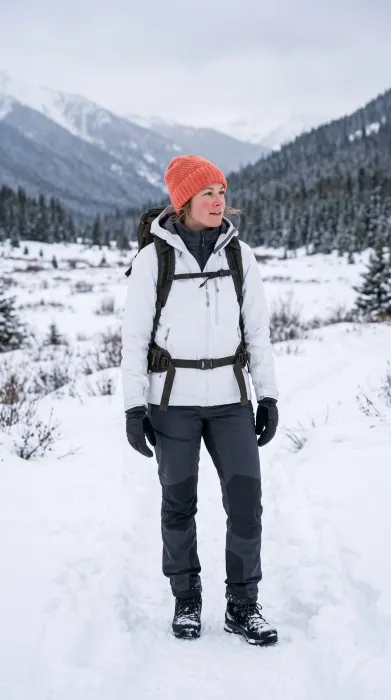
22. Insulated Blue Jacket with Fleece-Lined Trousers
A blue insulated jacket paired with fleece-lined hiking trousers provides a cozy-looking combination for colder walks. Choose trousers designed for outdoor movement and layer a moisture-wicking base underneath rather than wearing cotton next to the skin. Warm hiking socks, waterproof boots, and insulated gloves add practical protection. A neck gaiter helps shield the face and neck from cold wind when needed. This outfit is best for cold, relatively manageable trails where the layers provide enough warmth without causing overheating during exertion.
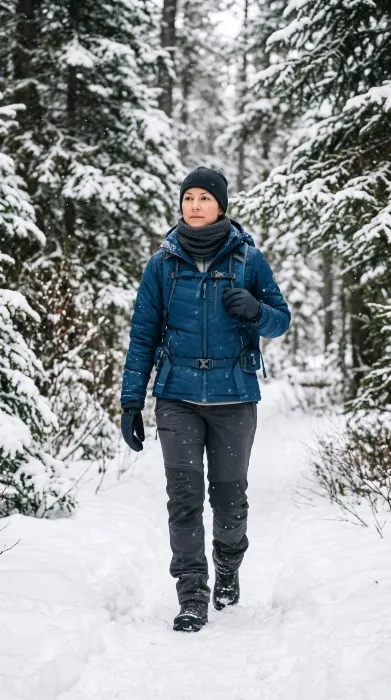
23. Rust Shell Jacket with Sand-Colored Hiking Pants
A rust shell jacket adds a warm, earthy accent to sand-colored hiking pants. Wear a dark thermal base layer and a fleece midlayer to create an adjustable system beneath the shell. The lighter trousers provide a visual contrast, while brown boots and a dark backpack keep the outfit grounded. Choose weather-resistant trousers if the trail is damp or muddy. This combination is suitable for woodland routes, foothill walks, and scenic outdoor excursions where conditions are cool and changeable.
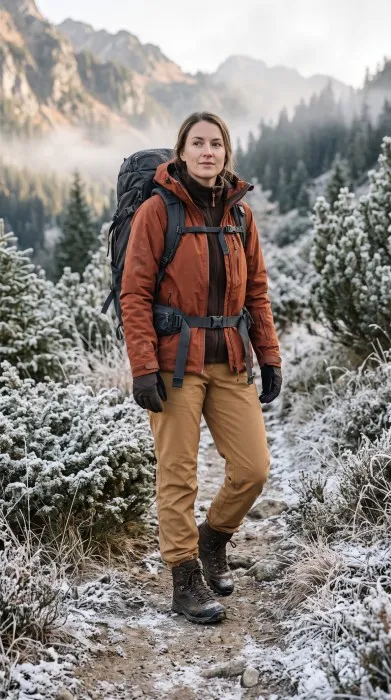
24. Lightweight Insulated Jacket with Convertible Hiking Pants
Convertible hiking pants paired with a lightweight insulated jacket provide flexibility for changing activity levels and conditions. Choose trousers that can be adjusted comfortably and a jacket that leaves room for a base layer. A thin fleece, hiking socks, and supportive boots complete the outfit. Carrying a waterproof shell makes the combination more adaptable when the weather becomes colder, windier, or wetter. This practical setup works well for long day hikes where temperatures may change between shaded forests and sunny open sections.
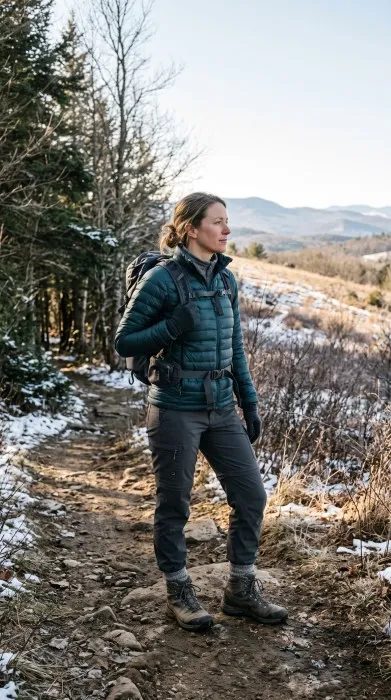
25. Charcoal Parka with a Bright Lime Beanie
A charcoal parka creates a versatile foundation for a winter hiking outfit, while a bright lime beanie adds a distinctive pop of color. Wear a thermal top and insulating midlayer underneath, then pair the parka with durable dark hiking trousers. Waterproof boots and warm gloves complete the practical combination. The vivid hat can make the outfit easier to distinguish in many outdoor settings, although it should not replace proper trail safety measures. This outfit suits established trails and cold-weather countryside walks.
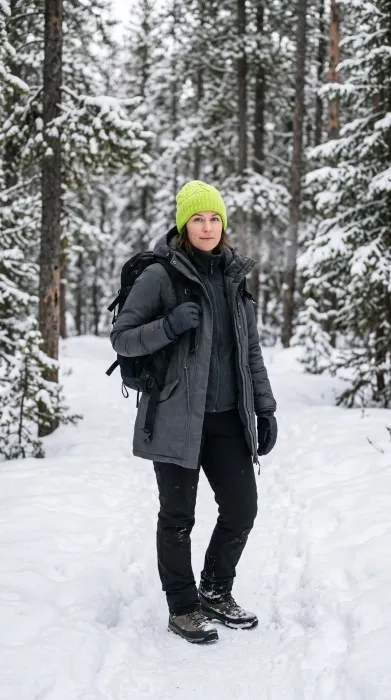
26. Soft Lilac Insulated Jacket with Grey Trail Pants
A soft lilac insulated jacket offers a gentle color alternative for women who want outdoor clothing with a lighter visual style. Pair it with grey technical trail pants, a thermal base layer, and waterproof hiking boots. A charcoal fleece and neutral gloves add warmth while balancing the pastel jacket. Choose a jacket with enough insulation for your activity level and a shell layer if wet conditions are expected. This outfit is well suited to casual winter trails and scenic outdoor photography on clear, cold days.
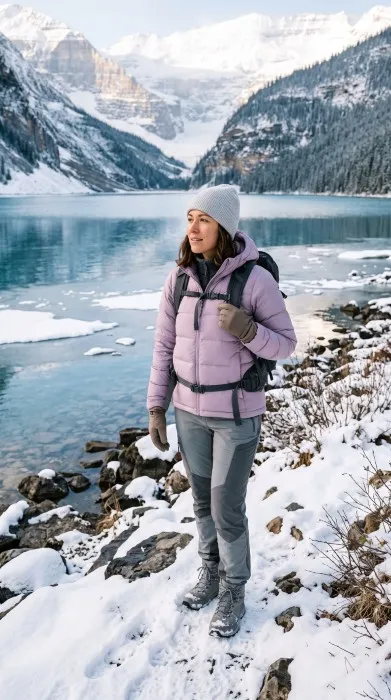
27. High-Neck Fleece with Insulated Bib Pants
Insulated bib pants paired with a high-neck fleece provide additional coverage for cold, snowy hiking conditions. Choose bib pants designed for winter outdoor activity, with adjustable straps and enough room for base layers. A waterproof shell jacket can be added when snow or wind requires extra protection. Warm boots, suitable socks, and insulated gloves complete the outfit. This combination is most useful for snowy trails and winter excursions where temperatures are low and the clothing needs to protect the torso and lower body.
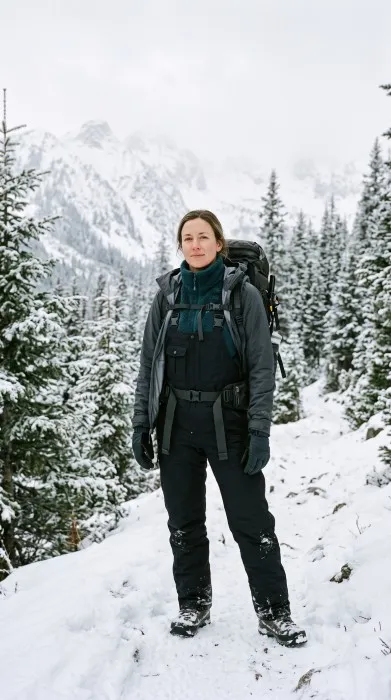
28. Quilted Insulated Jacket with Reinforced Hiking Pants
A quilted insulated jacket and reinforced hiking pants create a durable combination for trails with rough surfaces and colder temperatures. Select pants with articulated knees and abrasion-resistant panels to make scrambling over uneven ground more comfortable. A breathable base layer and fleece midlayer can be adjusted according to activity level. Add grippy boots and a supportive backpack with a secure hip belt for longer walks. This outfit is suited to established rocky trails and outdoor routes where durability matters.
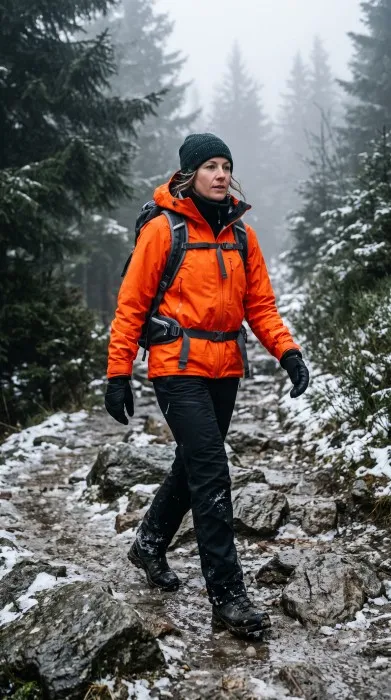
29. High-Visibility Orange Shell with Black Layers
A high-visibility orange shell makes a practical statement for outdoor routes where visibility is important. Layer it over a warm fleece and moisture-wicking base top, then pair it with black weather-resistant hiking trousers. Choose waterproof boots, warm socks, and gloves appropriate to the expected conditions. A dark backpack with reflective details can complete the outfit while keeping the orange jacket prominent. This combination is especially useful in overcast environments and on shared trails, although visibility needs still depend on the terrain and activity.
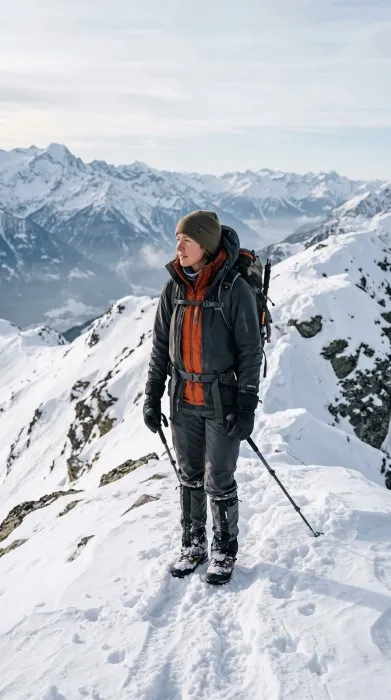
30. Layered Alpine Outfit with a Down Jacket and Shell
A layered alpine outfit combines a warm down or synthetic insulated jacket with a protective shell when conditions require additional wind and precipitation resistance. Start with a moisture-wicking base layer, add a fleece or active-insulation midlayer, and finish with the appropriate outer protection. Technical hiking trousers, insulated waterproof boots, warm socks, gloves, and a suitable backpack complete the setup. The key is to adjust the layers before you become sweaty or chilled. This combination is best suited to demanding cold-weather hikes when the clothing is matched carefully to the route, forecast, and activity level.
Winter Hiking Outfit Guide for Women 2027
Choose Layers That Work Together
A reliable winter hiking outfit usually consists of three functional layers: a moisture-wicking base layer, an insulating midlayer, and an outer layer that protects against the conditions. Merino wool and synthetic fabrics are useful for base layers because they manage moisture more effectively than cotton during active movement. Fleece or suitable insulated garments provide warmth, while a waterproof and breathable shell helps protect against rain, wind, and wet snow. Adjust the layers as your effort level and the weather change.
Select Pants for the Trail Conditions
Winter hiking trousers should allow a full stride, resist abrasion, and suit the expected temperature and precipitation. Stretch hiking pants work well for many maintained trails, while softshell trousers can offer added wind resistance. Fleece-lined or insulated trousers may be useful in colder conditions, and waterproof overtrousers can provide protection in persistent rain or wet snow. Avoid choosing ordinary fashion leggings for demanding or exposed winter routes unless they are genuinely suitable for the conditions.
Pay Attention to Footwear and Socks
Your boots should match the trail surface, weather, and level of difficulty. Waterproof hiking boots can help on wet trails, while insulated models may be useful in snow and very cold conditions. Select socks that manage moisture and fit comfortably without making the boots too tight. Traction devices may be necessary on icy routes, and no footwear can guarantee safety on every surface. Break in new boots before a long hike to reduce the risk of discomfort and blisters.
Keep Your Head, Hands, and Neck Warm
A suitable hat, gloves, and neck gaiter can make a substantial difference in cold weather. Choose gloves that balance warmth with enough dexterity to handle zippers, water bottles, and hiking equipment. For very cold conditions, mittens or a layered handwear system may provide more warmth. Carry an extra dry pair of gloves and socks on longer outings if conditions make wet gear likely. Protecting these areas is important because wind and moisture can increase heat loss.
Pack for Changing Weather
Even a well-planned winter outfit may need adjustments during a hike. Carry an extra insulating layer, a waterproof shell if it is not already worn, water, food, a navigation method, and a charged phone or other emergency communication device appropriate to the route. Check the forecast, daylight hours, and trail conditions before departure. For snowy or remote routes, assess avalanche risk where relevant and use appropriate training and equipment. Turn back if conditions deteriorate or the route exceeds your experience.
Conclusion: Make Every Winter Hike More Comfortable
Winter hiking outfits should do more than look attractive; they should support warmth, moisture management, mobility, and protection from changing weather. These 30 outfit ideas offer inspiration ranging from colorful insulated jackets and practical softshell layers to technical alpine clothing for colder conditions. Adapt each combination to your route, activity level, forecast, and personal comfort rather than relying on appearance alone. Thoughtful layering, suitable boots, and well-chosen accessories can make a significant difference during a winter adventure. With preparation and the right equipment, you can enjoy the beauty of the colder season while dressing confidently for the outdoors.
About This Outdoor Fashion Blog
This blog shares seasonal outdoor clothing inspiration for women who enjoy combining practical equipment with personal style. Our winter hiking collection explores a range of outfit combinations for woodland walks, countryside trails, snowy landscapes, and more demanding mountain environments. Each idea highlights clothing layers, useful accessories, and visual styling details that can be adapted to individual needs. The image prompts are intended for creating outdoor fashion concepts and editorial visuals without embedding images in the article. Above all, our aim is to encourage thoughtful preparation, comfortable clothing choices, and a more enjoyable experience on winter trails.