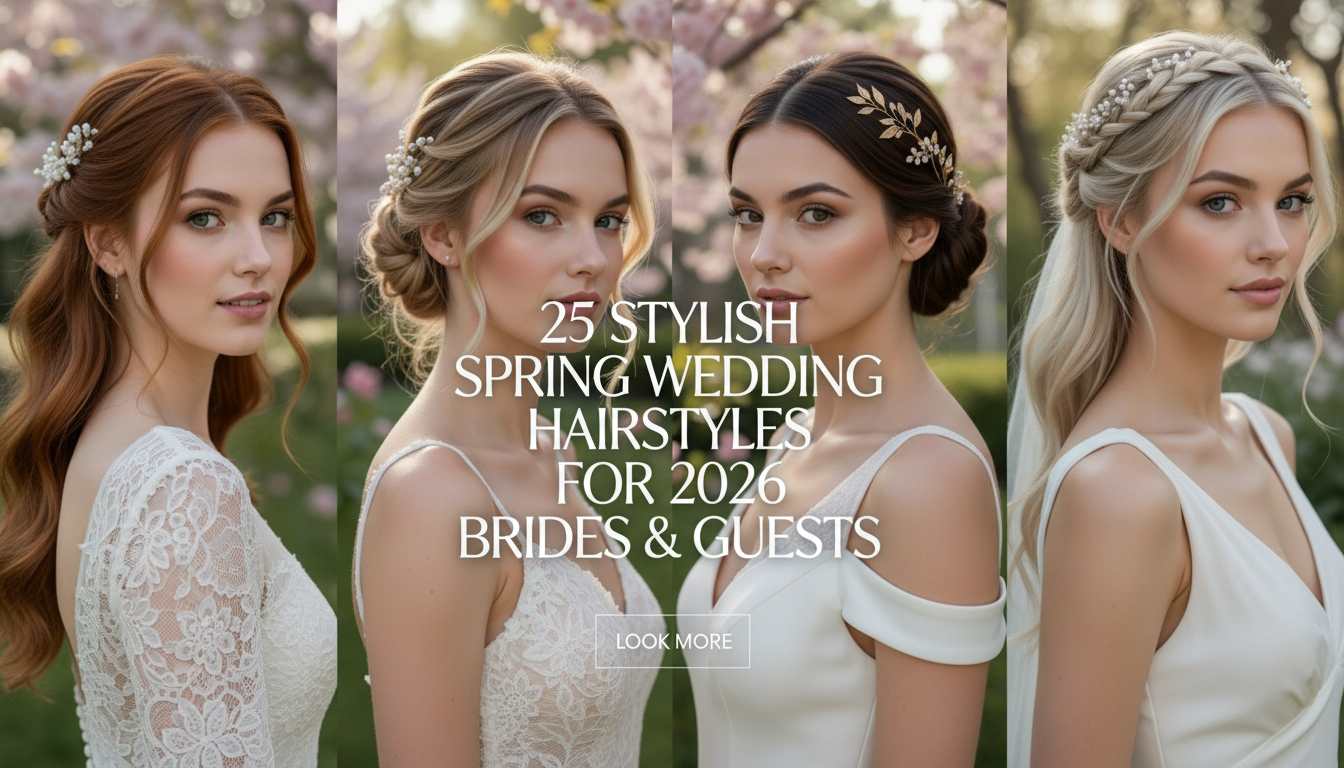
Wedding hair carries a weight beyond mere aesthetics—it’s part of the sacred ritual of transformation that weddings represent, the moment when everyday appearance elevates into something ceremony-worthy, memory-captured, and genuinely special. Whether you’re the bride experiencing perhaps the most photographed day of your life, a bridesmaid supporting your friend’s beautiful moment, or a guest wanting to honor the occasion’s significance, your hair becomes part of the day’s visual story. Spring 2026 weddings, with their garden ceremonies, soft natural light, and floral-filled celebrations, create the most romantic possible context for hair that’s genuinely beautiful.
Spring wedding hair in 2026 has evolved into something refreshingly authentic. The overly structured, lacquered-stiff formal styles that dominated previous decades have given way to softer, more organic approaches that honor natural texture, incorporate genuine movement, and look beautiful in photographs without appearing frozen or artificial. Modern wedding hair celebrates the reality that real people—with real hair that moves and responds to weather—create more beautiful memories than perfectly static mannequin presentations ever could.
What makes this season’s wedding hair particularly exciting is the extraordinary range it encompasses. Brides are rejecting the idea that wedding hair must follow specific rules or conventions, embracing everything from sleek minimalist styling to elaborate floral crown artistry, from natural texture worn with pride to Hollywood glamour waves, from classic updos reimagined for contemporary tastes to hair worn completely down in all its flowing glory. Bridesmaids are increasingly wearing individualized styles that flatter each person’s features rather than identical hairstyles that ignore individual beauty. Guests are bringing editorial-level sophistication to wedding styling that honors the occasion without overshadowing the bridal party.
BRIDE STYLES
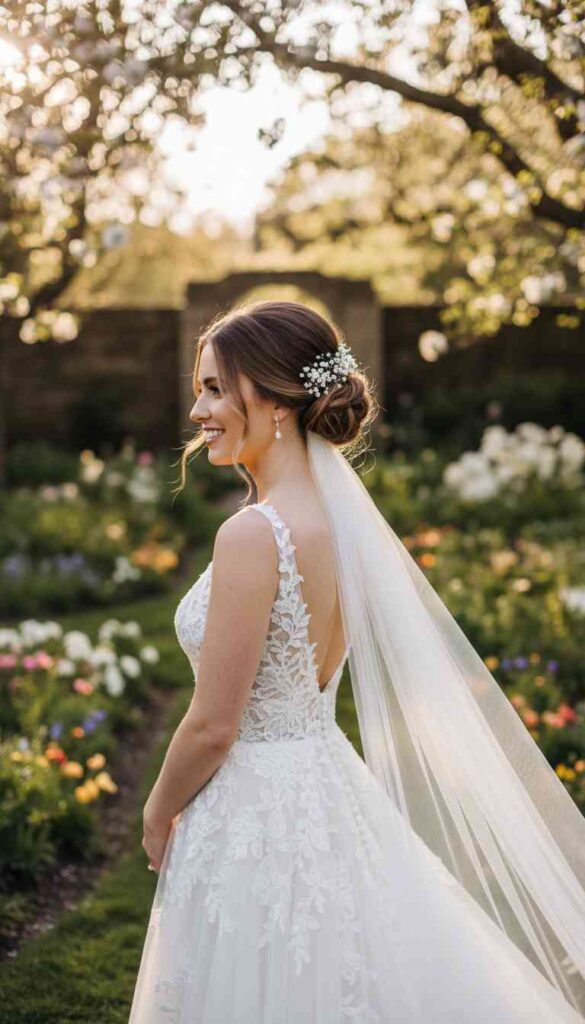
1. Romantic Low Bun with Baby’s Breath
A soft, textured low bun adorned with delicate baby’s breath creates timeless bridal romance.
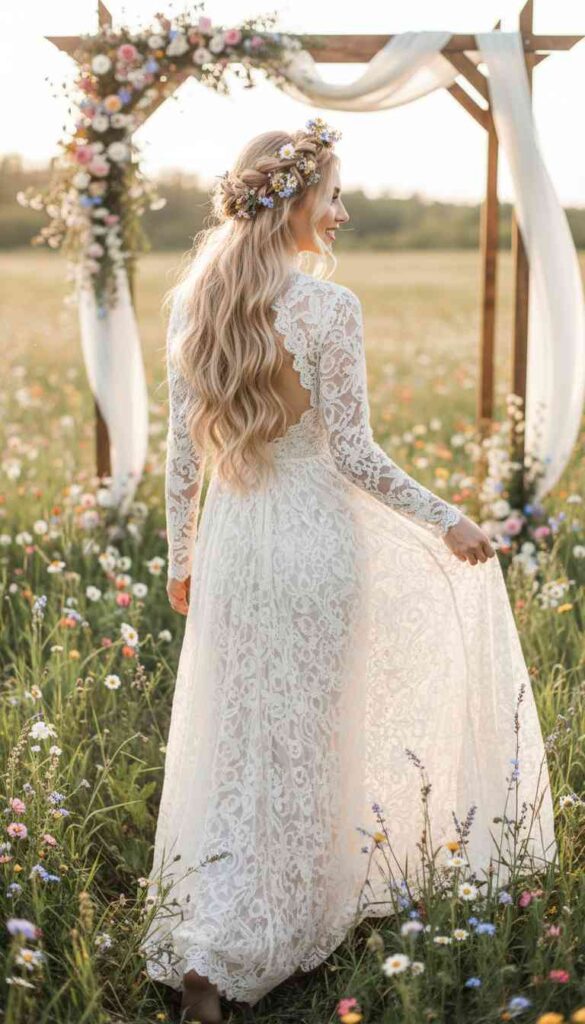
2. Bohemian Braided Crown
Intricate braided crown with loose flowing hair creates free-spirited bohemian bridal magic.
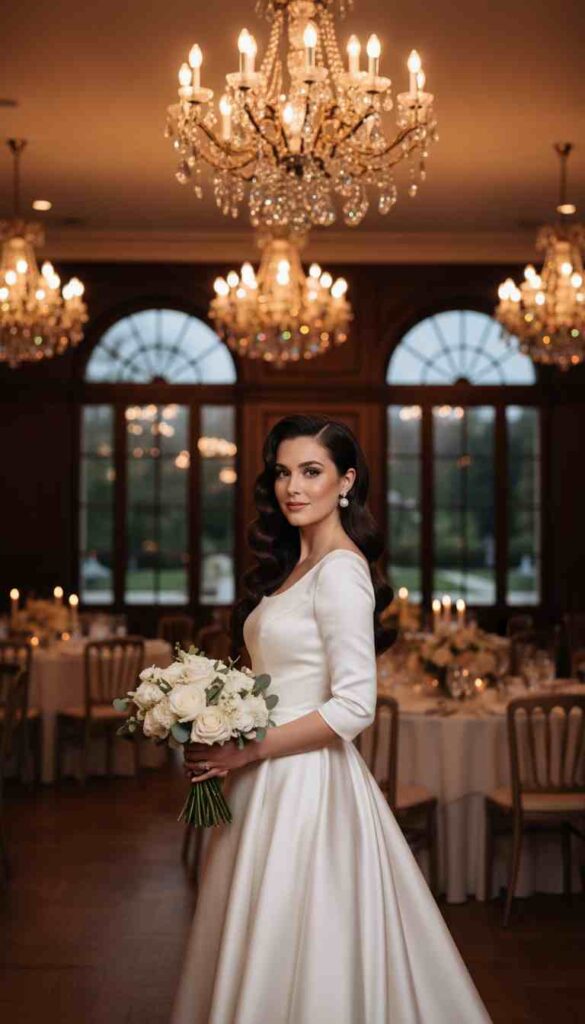
3. Old Hollywood Waves
Structured vintage waves create glamorous throwback bridal sophistication.
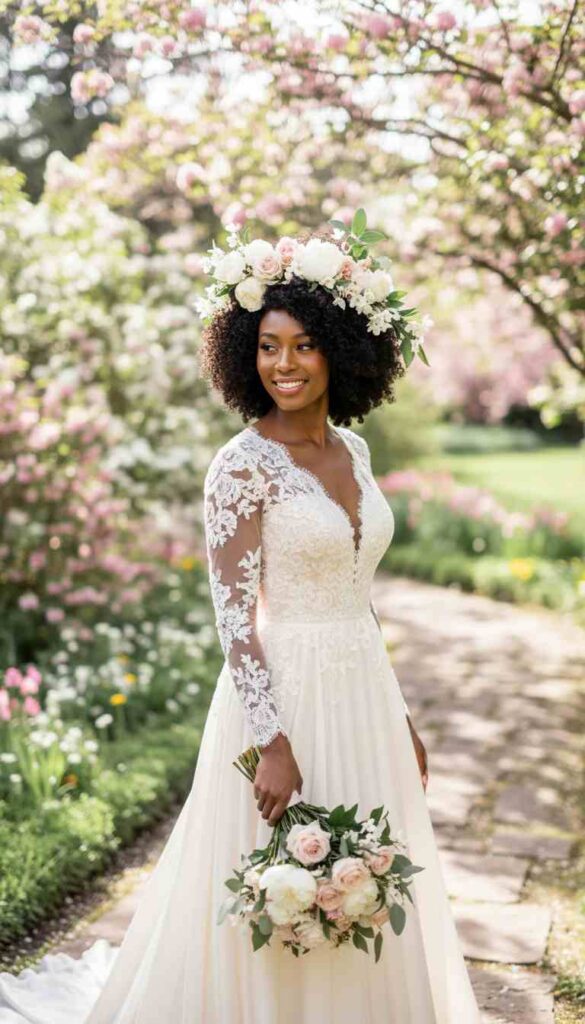
4. Natural Texture Crown
Natural coils and curls adorned with a floral crown celebrates authentic textured bridal beauty.
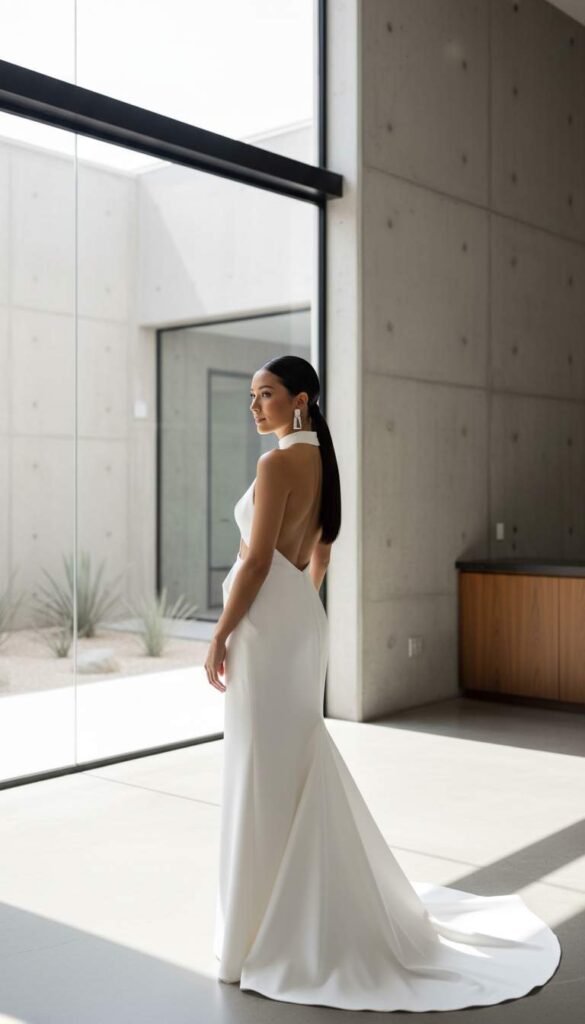
5. Sleek Low Ponytail
Ultra-sleek low ponytail with wrapped base creates modern minimalist bridal statement.
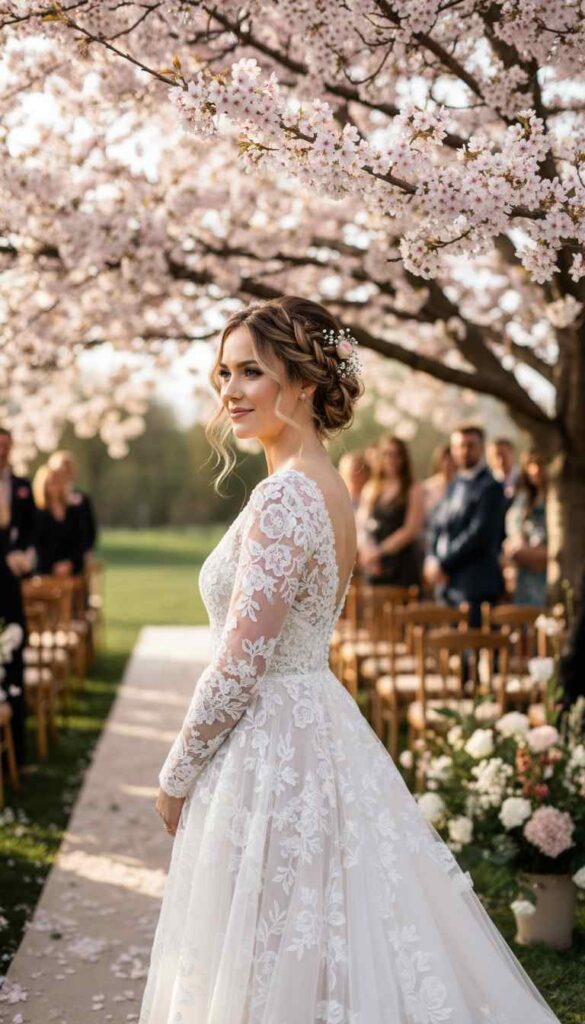
6. Loose Romantic Updo
Intentionally undone updo with pieces falling naturally creates soft romantic bridal elegance.
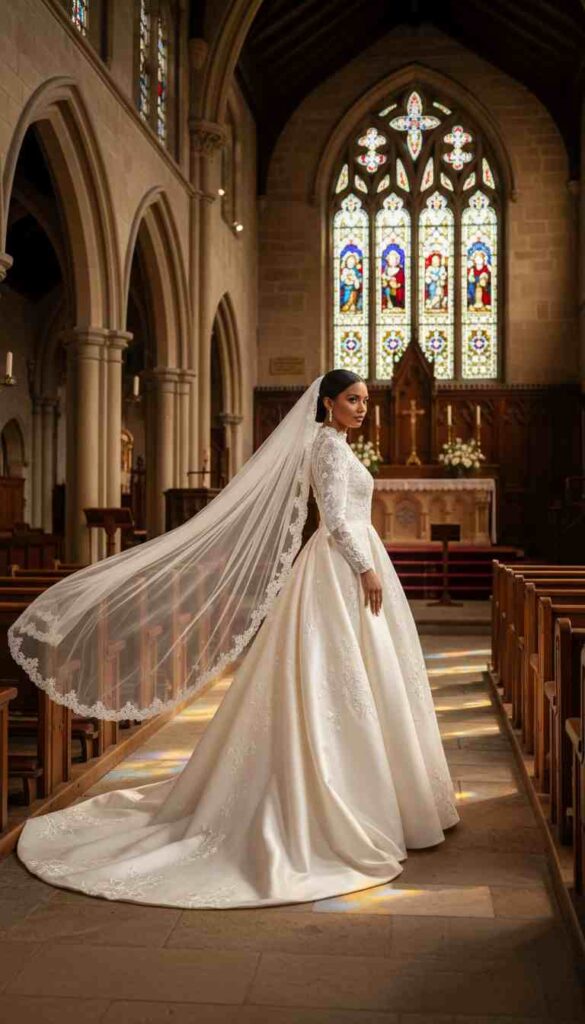
7. Sleek Bridal Bun with Veil
Classic smooth bun positioned perfectly for cathedral veil creates traditional bridal elegance.
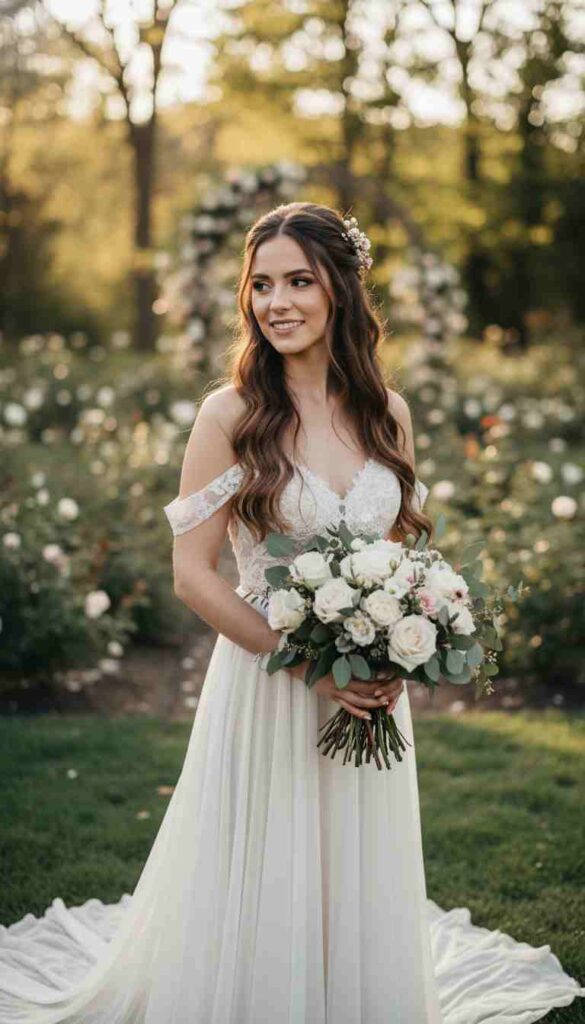
8. Half-Up Twisted Crown
Front sections twisted and pinned creating crown effect with flowing hair below.
BRIDESMAID STYLES
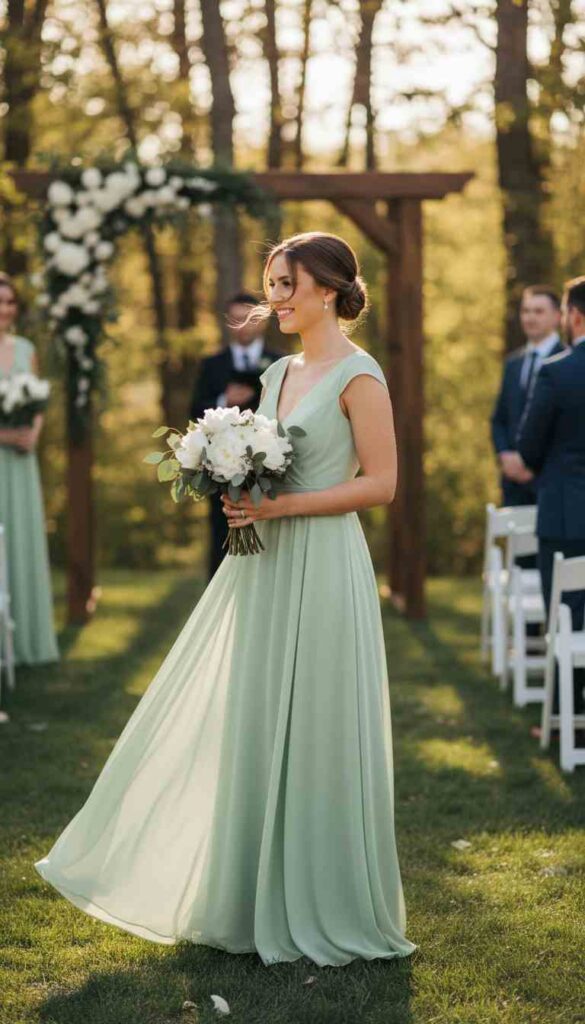
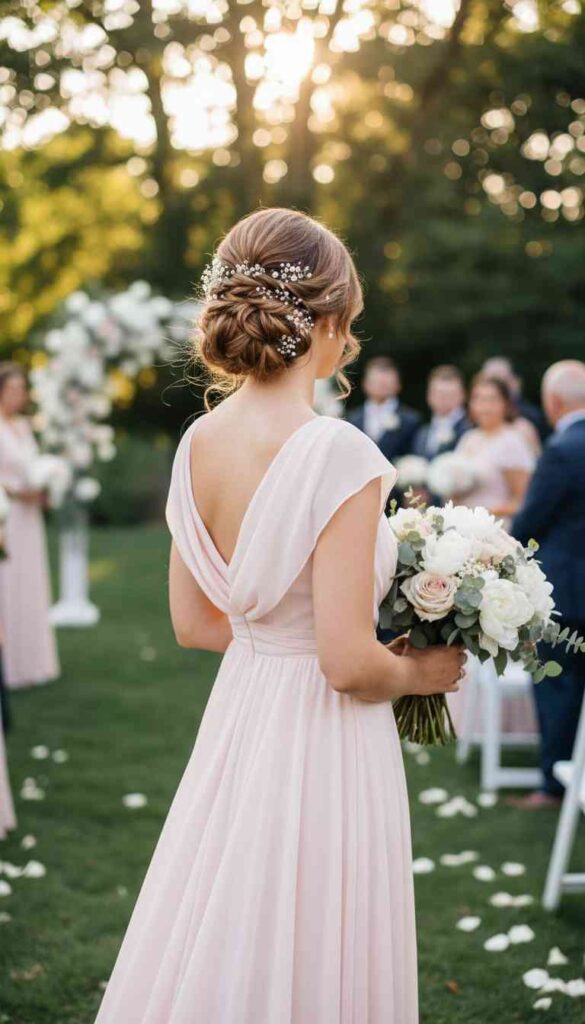
9. Simple Low Chignon
Classic low chignon creating polished supporting elegance without competing with bride.
10. Romantic Side Braid
Loose side braid over shoulder creates feminine bridesmaid elegance.
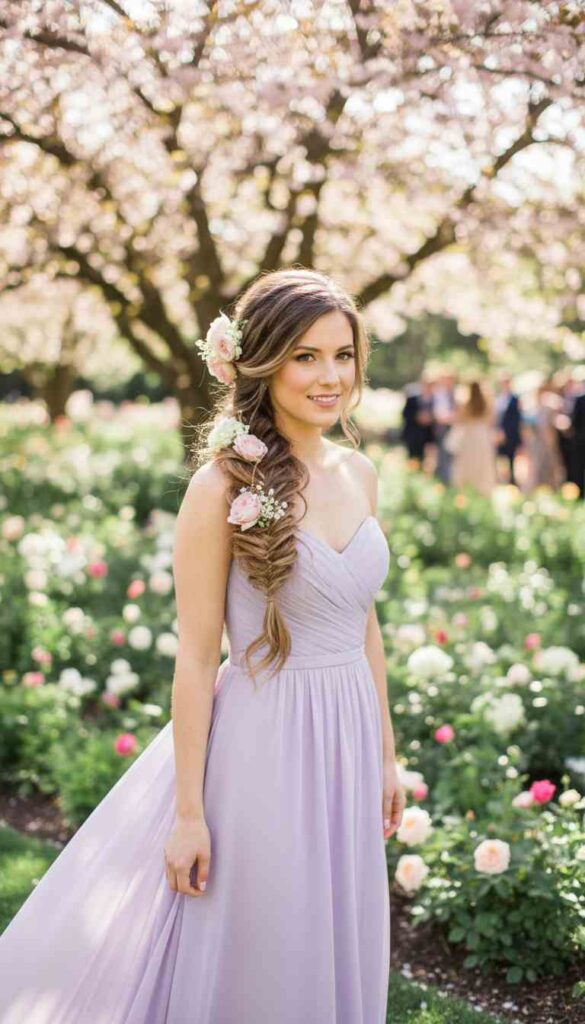
11. Textured High Bun
High bun with visible texture creates youthful bridesmaid energy.
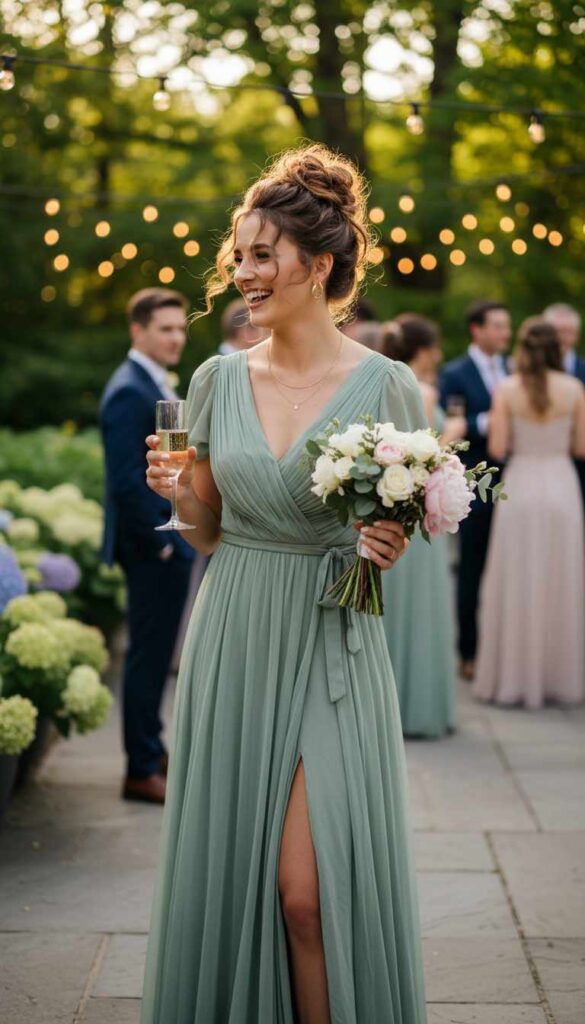
12. Pinned Waves Half-Up
Waves pinned back from face leaving flowing length creates versatile bridesmaid style.
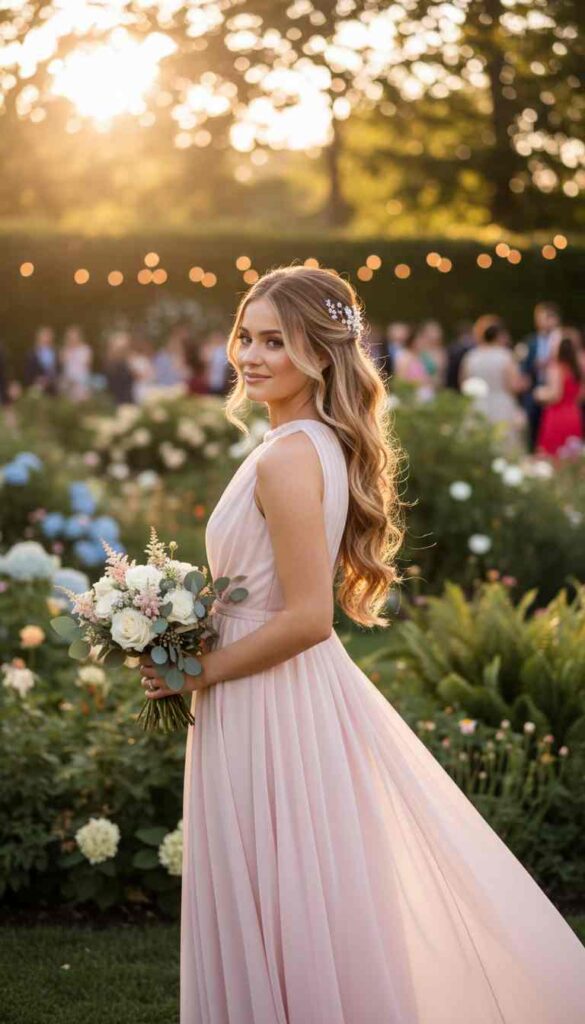
13. Sleek Center Part Down
Simple sleek hair worn down with center part creates modern bridesmaid simplicity.
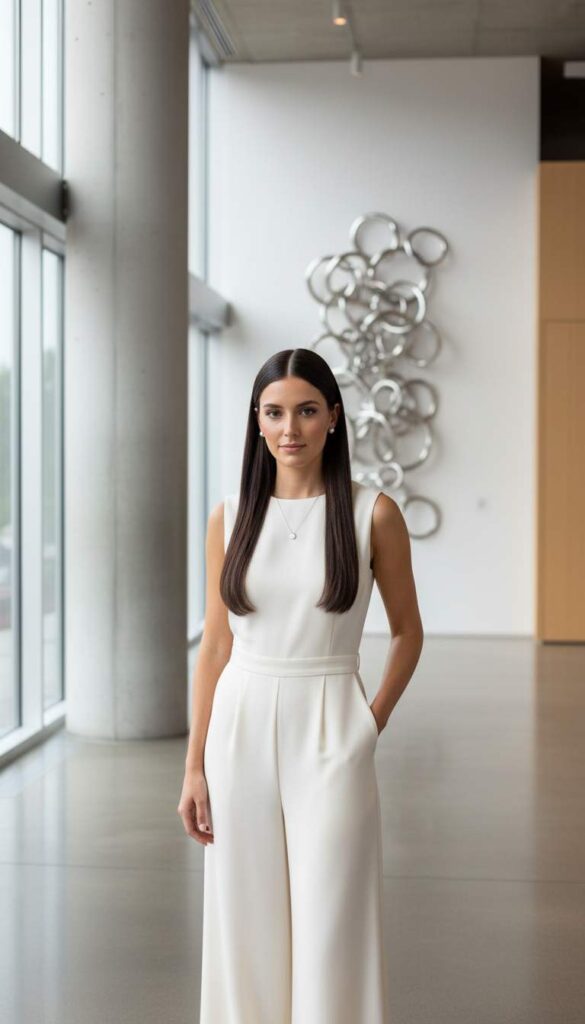
14. Twisted Low Bun
Twisted sections forming low bun creates interesting bridesmaid texture.
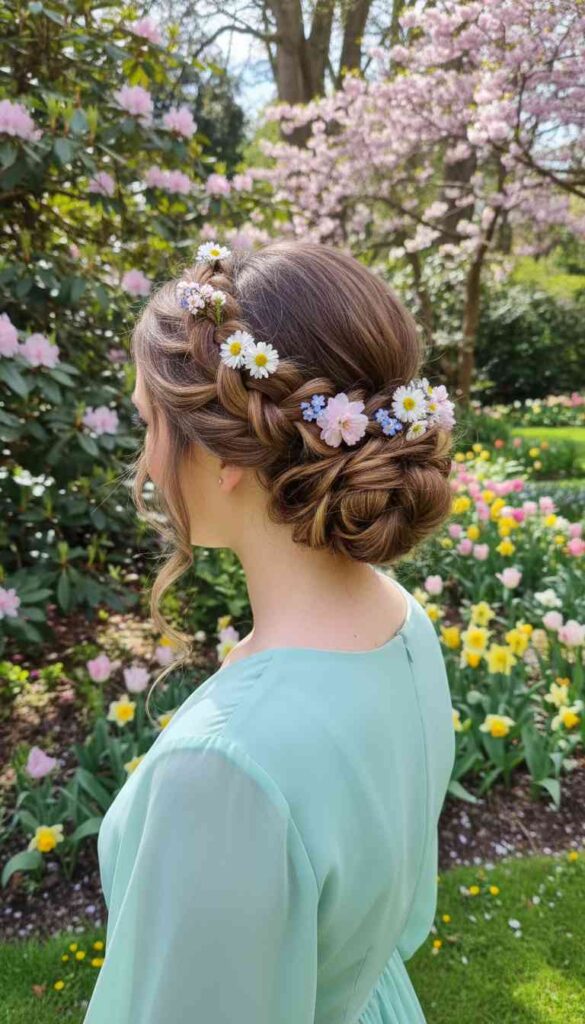
15. Dutch Braid Crown
Dutch braid creating crown around head creates intricate bridesmaid artistry.
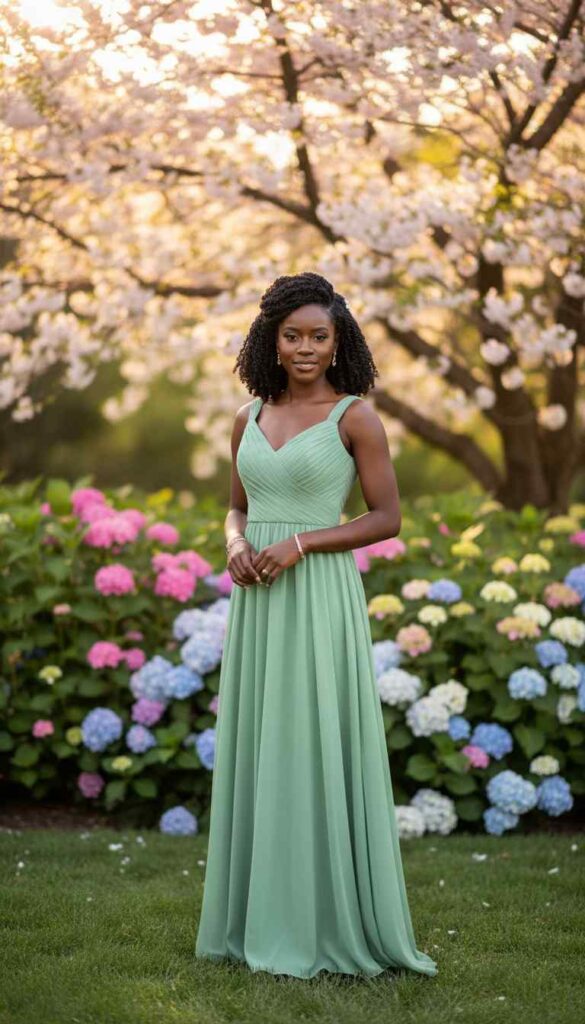
16. Natural Texture Half-Up
Natural coils pinned back from face showing beautiful texture creates authentic bridesmaid beauty.
GUEST STYLES
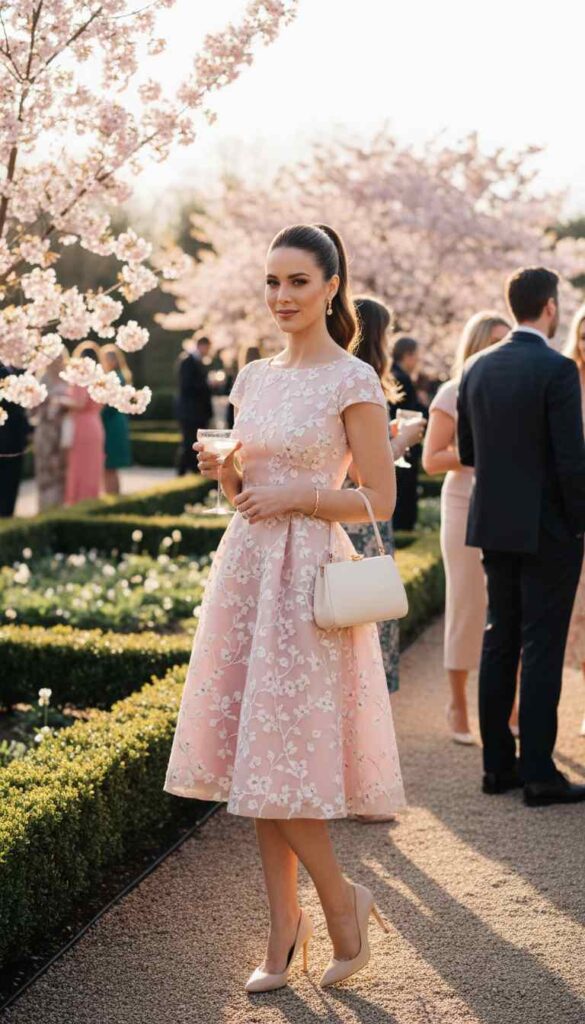
17. Polished Ponytail
Sleek high ponytail creates chic guest elegance without upstaging bridal party.
18. Soft Waves Down
Gentle waves worn down creates classic feminine guest beauty.
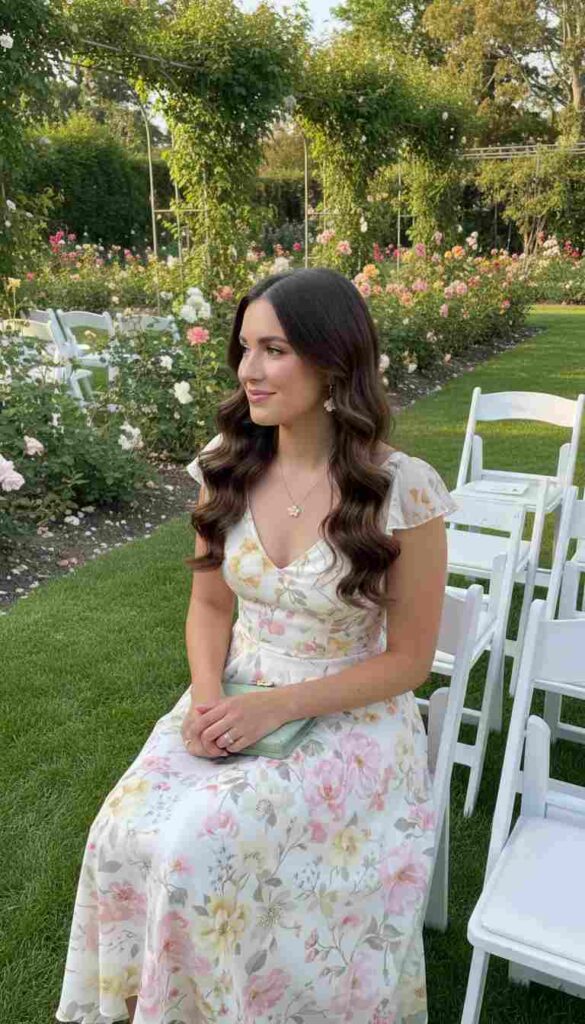
19. Low Side Bun
Elegant low bun positioned to one side creates sophisticated asymmetric guest style.
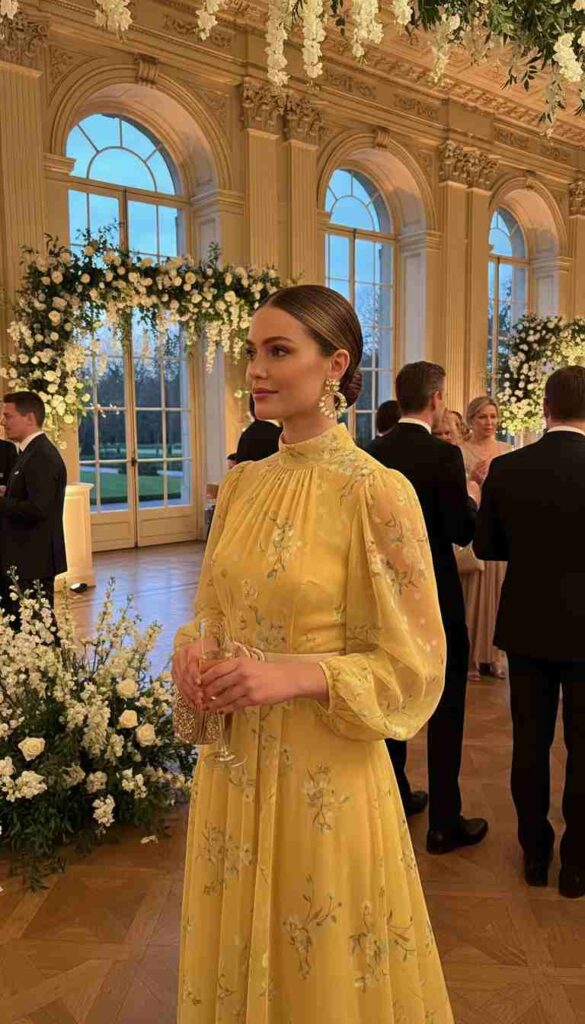
20. Messy Top Knot
Relaxed high bun creates casual-chic guest style for outdoor spring wedding.
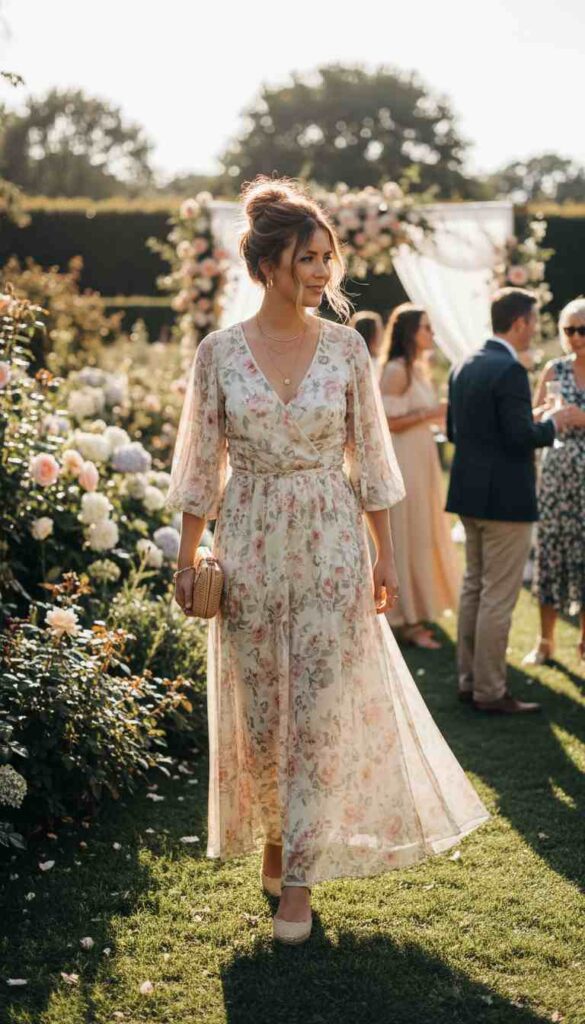
21. Fishtail Braid Side
Intricate fishtail braid over shoulder creates detailed guest artistry.
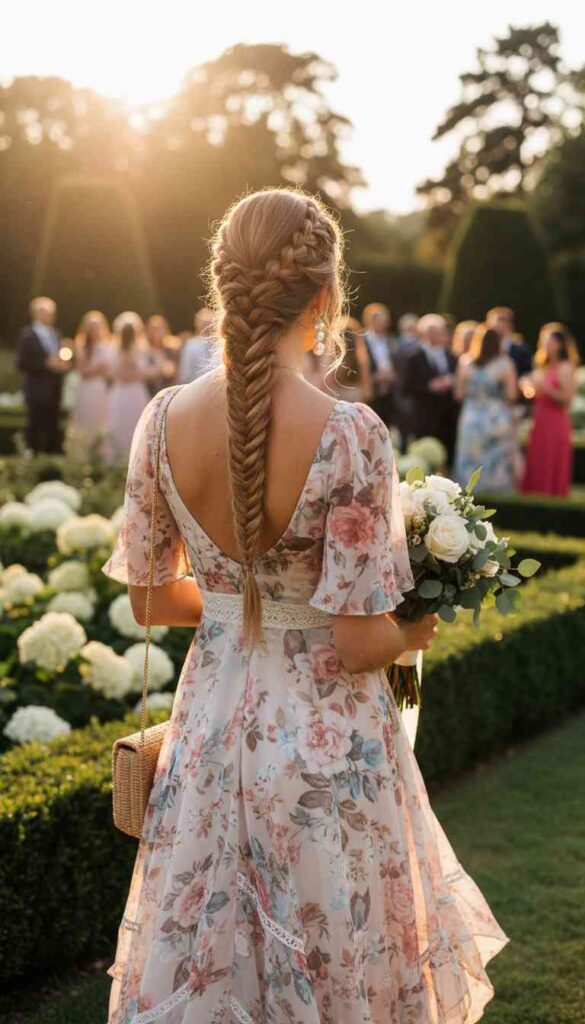
22. Elegant French Twist
Classic French twist creates timeless sophisticated guest elegance.

23. Beach Waves Half-Up
Undone beach waves with sections pinned creates relaxed coastal guest style.
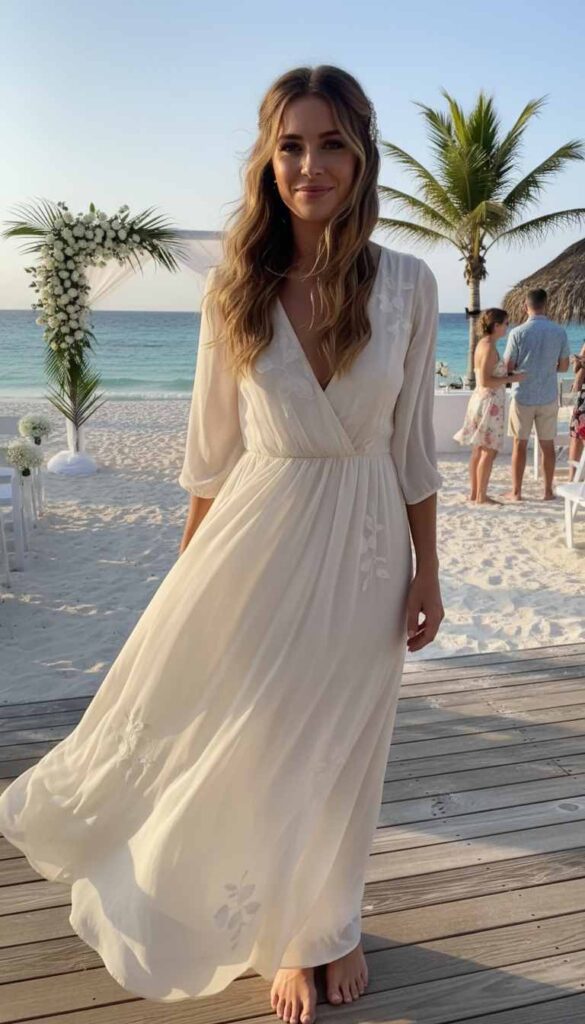
24. Voluminous Blow-Out
Professional bouncy blow-out creates glamorous guest impact.
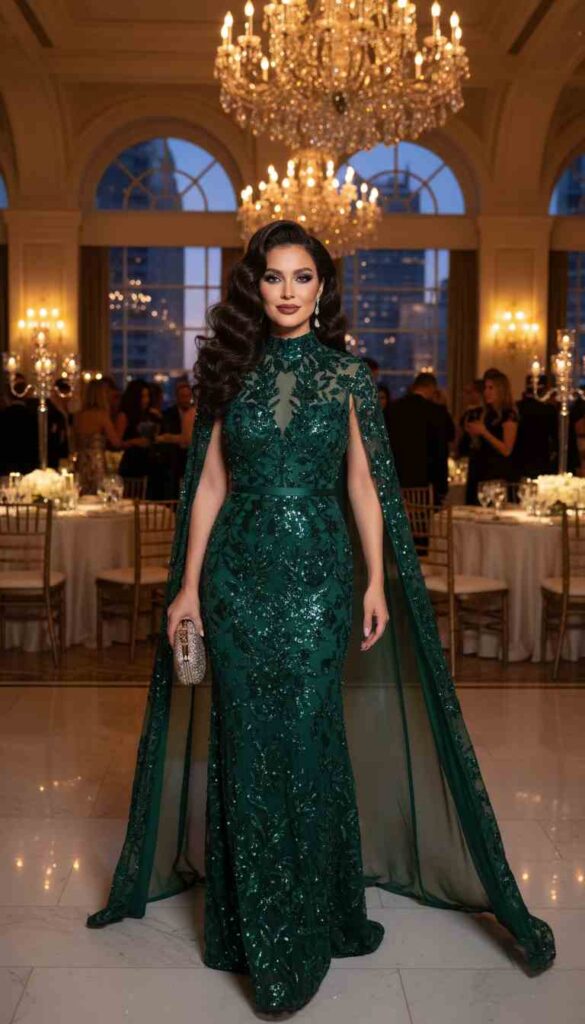
25. Pinned Curl Vintage
Victory rolls or pinned curls creating vintage-inspired guest glamour.

Understanding Wedding Hair Timing
Wedding hair timing requires strategic planning that accounts for ceremony time, getting-ready location, and the reality that spring weather can be unpredictable. For morning or early afternoon ceremonies, hair appointments typically occur very early—often beginning at 6 or 7 AM to ensure completion by the time photography begins. This early timing means styles must be chosen with longevity in mind: they need to look as beautiful at the evening reception as they did during morning preparations.
Brides typically receive their hair styling last among the bridal party, ensuring the style is freshest for the ceremony. This means bridesmaids and mothers begin their appointments significantly earlier. The entire hair timeline should build in buffer time for unexpected challenges—a style that doesn’t work as envisioned, humidity affecting hold, or simple running-behind that happens with any complex coordinated timeline.
Trial runs are non-negotiable for bridal party hair. These appointments—typically scheduled four to eight weeks before the wedding—allow testing of proposed styles in real conditions with real hair. Trials reveal whether a style actually suits your face, whether your hair holds a particular technique, and whether you genuinely love the style enough to feature it in permanent photographs. The cost of trial appointments is genuinely worthwhile insurance against wedding day disappointment.
Spring Weather Considerations
Spring weather’s notorious unpredictability creates specific challenges for wedding hair. A ceremony planned for sunny outdoor perfection may face unexpected rain, surprising wind, or the humidity that follows spring showers. Styles chosen for spring weddings should anticipate these possibilities through strategic construction and appropriate products.
Humidity-proof products become essential rather than optional. Anti-humidity sprays or serums create barriers that prevent moisture from disrupting carefully styled patterns. Strong-hold hairsprays maintain style integrity through environmental challenges. For outdoor ceremonies, having a weather contingency plan prevents panic—knowing how the bridal party will transition to an indoor backup location if necessary, and how hairstyles will adapt if needed.
Updos generally withstand spring weather better than down styles simply because they’ve already gathered hair away from environmental exposure. However, modern texture sprays and natural-hold products create down styles that maintain their character through weather variation without the stiff, artificial appearance that heavy traditional hairspray created. Your stylist’s expertise with spring wedding hair helps choose styles and products that genuinely work in real spring conditions.
The Role of Hair Accessories
Spring 2026 sees extraordinary creativity in wedding hair accessories that move far beyond the traditional veil and tiara. Fresh flowers—both individual blooms tucked strategically and elaborate floral crowns—create romantic spring connections between hair and the natural world blooming around the ceremony. Baby’s breath, once considered dated, has returned with renewed appreciation for its delicate romantic quality.
Metallic accessories—gold leaf pieces, pearl pins, delicate chain details—add subtle sparkle without the costume-jewelry quality that some traditional hair accessories projected. These pieces catch spring’s particular light quality beautifully, creating moments of shimmer in photographs without overwhelming the overall look.
Veils remain deeply personal choices. Some brides feel incomplete without this traditional element; others find veils unnecessary or burdensome. Modern veils range from barely-there blusher veils to dramatic cathedral lengths that create extraordinary photographic impact. The veil should coordinate with both dress formality and hairstyle construction—certain updos specifically accommodate veil placement while others work better with hair worn down.
Coordinating Bridal Party Styles
The question of whether bridesmaids should wear identical hairstyles or individualized ones has shifted decidedly toward individualization. The matched-bridesmaid aesthetic—where every attendant wore identical dresses and identical hairstyles—has given way to understanding that different face shapes, hair textures, and personal styles mean identical hairstyles don’t flatter everyone equally.
Contemporary bridal parties often choose a styling concept that allows individual interpretation—”romantic updos” rather than “low chignon specifically,” or “half-up styles with texture” rather than “twisted crown with pinned back sections.” This framework creates visual cohesion in photographs while ensuring each person wears a style that genuinely suits them.
The bride’s hairstyle should distinguish itself from bridesmaid styles through some element—more elaborate construction, inclusion of accessories bridesmaids don’t wear, or simply more dramatic styling. The visual hierarchy ensures the bride remains the obvious focal point in photographs while bridesmaids look beautiful in supporting roles. This balance serves the day’s narrative structure effectively.
Guest Hair Etiquette
Wedding guests face the delicate balance of looking genuinely beautiful and occasion-appropriate without appearing to compete with the bridal party for attention. Certain styles inherently read as bridal—elaborate floral crowns, cathedral-length hair extensions, or extremely intricate updos with multiple accessory elements. Guests should generally avoid these explicitly bridal styling choices out of respect for the wedding couple.
Color considerations also matter for guest hair—if you’re planning to debut a dramatic new hair color at a friend’s wedding, consider the visual impact in photographs. You want to look beautiful, but you don’t want your hair color to become a visual focal point that draws attention away from the couple. This doesn’t mean avoiding all color—it means choosing thoughtfully and considering the overall visual landscape you’ll exist within.
Practical guest hair considerations include the venue and season. Outdoor garden ceremonies suggest styles that withstand breeze and potential weather. Evening formal weddings reward slightly more dramatic styling than daytime casual affairs. The invitation’s dress code language provides guidance—”black tie” suggests more formal hair styling than “garden party casual.”
Hair Health Before Wedding Events
Whether you’re bride, bridesmaid, or guest, your hair needs to be in genuinely good condition to look beautiful in wedding photography’s close-up attention. The weeks leading up to a spring wedding should include targeted hair health practices that ensure your hair is the healthiest possible version of itself.
Deep conditioning treatments weekly throughout the two months before the wedding build moisture reserves that create glossy, healthy-looking hair. Protein treatments every few weeks strengthen hair structure, reducing breakage and improving style hold. Regular trims prevent split ends from traveling up the hair shaft, maintaining clean beautiful ends that photograph well.
If you’re planning any color services, schedule the final appointment no closer than one week before the wedding—this allows color to settle and tone to its most beautiful state, and prevents the panic that would occur if the color didn’t turn out as hoped. Never debut a dramatically new color the day before a wedding; if disaster strikes, there’s no recovery time.
Professional vs. DIY Styling
Brides almost universally benefit from professional styling—the day’s significance, the photographic permanence, and the complexity of coordinating an entire bridal party make professional expertise worthwhile. For bridesmaids, the decision depends on budget, styling complexity, and personal skill level. Simple styles like sleek ponytails or beach waves might be DIY-achievable; intricate updos generally benefit from professional hands.
Wedding guests have the most flexibility regarding professional versus DIY styling. If you’re skilled with hot tools and enjoy styling your own hair, guest styling can be an enjoyable pre-wedding preparation activity. However, if styling causes stress or your skills don’t match your vision, the cost of professional styling is genuinely worthwhile for the confidence it provides and the time it saves during wedding-day preparations.
When choosing DIY styling, practice multiple times before the wedding day. Don’t attempt a style for the first time the morning of the event. Know your timeline realistically—complex updos take significantly longer than they appear to take when watching tutorials. And have backup plans if your attempted style doesn’t work—a sophisticated low ponytail or sleek bun as backup ensures you’re never truly stuck.
Capturing Hair in Wedding Photography
Wedding hair will be photographed from every conceivable angle—front, back, sides, three-quarter views, close-up details, and wide shots within the overall ceremony and reception scenes. Styles chosen should look beautiful from all perspectives rather than just the front-facing view you see in your mirror.
The back of bridal hairstyles deserves particular attention since the ceremony’s most iconic moment—walking down the aisle—photographs primarily from behind. Brides with elaborate back details, beautiful veil placement, or stunning hair accessories create compelling visual interest in these crucial photographs. Bridesmaids flanking the bride also appear significantly in back-view photography.
Natural spring light creates the most beautiful hair photography, and outdoor spring ceremonies provide exactly this light quality. Hair that catches and reflects light—through glossy finish, strategic highlights, or metallic accessories—creates dimensional beauty in photographs that flat matte hair cannot achieve. Discussing lighting conditions with your stylist helps optimize products and techniques for photographic beauty.
Celebrating Your Wedding Hair Journey
Wedding hair is intensely personal—it’s part of how you’ll remember one of life’s most significant days, featured prominently in photographs you’ll view for decades. Whether you’re the bride choosing the style that helps you feel most beautiful on your wedding day, a bridesmaid supporting your friend’s special moment, or a guest honoring the couple’s celebration, your hair becomes part of the day’s permanent visual story.
These 25 styles represent starting points for discovering your perfect spring wedding hair—adapt elements that resonate, reject what doesn’t speak to your aesthetic, and trust your instincts about what feels most authentically you. The most beautiful wedding hair isn’t the most technically impressive or the most elaborate—it’s the hair that makes you feel genuinely beautiful, genuinely comfortable, and genuinely yourself.